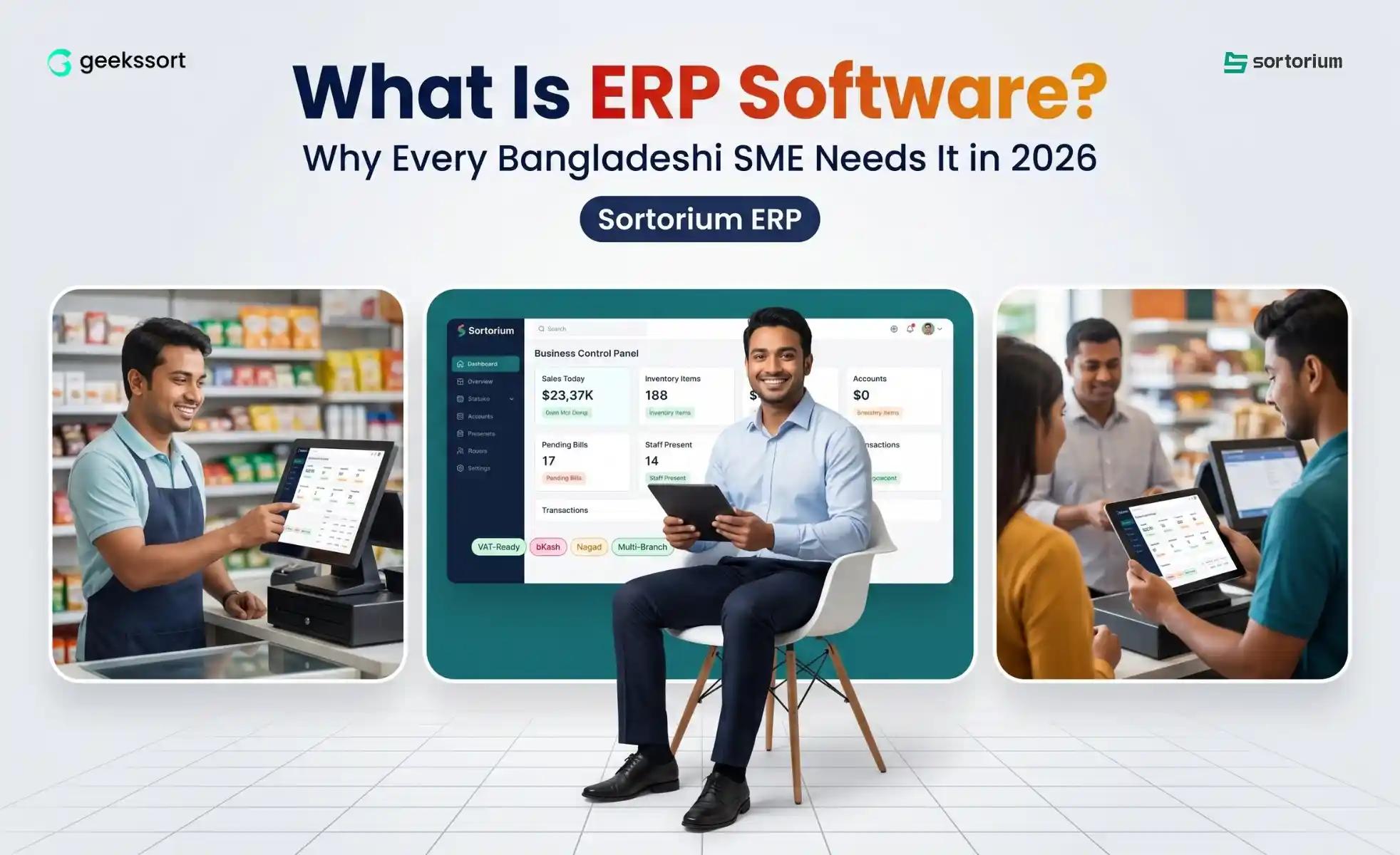
If your stock, sales, and accounts live in three separate places, ERP software fixes exactly that. Here is what ERP software means for Bangladeshi SMEs in 2026.
If you run a business in Bangladesh and your stock counts live in one place, your sales in another, and your accounts in a third, you already know the problem. ERP software in Bangladesh exists to fix exactly that. ERP stands for Enterprise Resource Planning, and at its simplest it brings inventory, sales, accounting, HR, and billing into one connected system, so your whole business runs on a single source of truth. In 2026, ERP software is no longer an enterprise luxury for Bangladeshi SMEs. It has become the practical line between a business that scales smoothly and one that keeps drowning in spreadsheets.
This guide explains what ERP software actually is, how it works, what it does for a growing Bangladeshi business, and how to tell when your company is ready for it. No jargon, no sales pitch, just a clear picture you can act on.
What ERP Software Is, in Plain Language
Think of ERP software as the central nervous system of your business. Instead of separate, disconnected tools that never quite agree with each other, ERP keeps every part of your operation talking to the same database in real time. When a sale happens at the counter, your stock count drops automatically, your daily revenue updates, and the accounting entry is created in the background. Nobody has to re-type anything into a second system.
Most small businesses start with a patchwork: a POS app for sales, an Excel file for inventory, a separate ledger for accounts, and a notebook or third tool for staff attendance. Each one is an island. ERP software replaces those islands with one connected platform. That is the whole idea. One system, one login, one version of the truth.
How ERP Software Actually Works: The Modules
ERP platforms are built from modules. Each module handles one area of your business, and because they share the same data, they stay in sync automatically. Here are the core modules a Bangladeshi SME will use most.
Inventory
Real-time stock tracking, reorder alerts, and multi-warehouse or multi-branch management. You always know what is in stock, what is running low, and what is sitting dead on a shelf.
Sales and POS
A fast counter checkout with billing, discounts, and receipt printing. Every sale feeds straight into inventory and accounts, so your numbers are never out of date.
Accounts
An automated ledger, profit and loss tracking, expense categorisation, and VAT-ready financial reports. The work that used to eat a full week at month-end happens continuously, in the background.
HR and Payroll
Employee records, attendance, leave management, and payroll. Staff data lives in the same system as everything else, so a salary run pulls real attendance, not a guess.
Billing and Transactions
Customer invoicing, due tracking, refunds, and a full audit trail of every transaction, including mobile financial service payments through bKash, Nagad, and Rocket.
This is exactly how Sortorium is structured. Its modules (Inventory Sort, Sales Sort, Accounts Sort, HR Sort, Billing Sort, and Transaction Sort) are not bolted together after the fact. They were built unified from day one, so the data never falls out of agreement.
Why Bangladeshi SMEs Need ERP Software in 2026
The pressure to digitise is no longer coming from consultants. It is coming from the market itself. ERP adoption in Bangladesh has climbed sharply over the past few years, driven by SMEs that simply cannot grow on manual systems any longer. A few forces are pushing this shift in 2026.
First, compliance has tightened. VAT reporting and NBR expectations reward businesses that keep clean, automatic records and punish those that scramble at filing time. ERP software keeps your books audit-ready by default.
Second, payments went digital. Customers expect to pay with bKash, Nagad, or Rocket, and reconciling those payments by hand is slow and error-prone. ERP software that supports mobile financial services keeps every payment matched to the right invoice automatically.
Third, retail is going multi-branch. A shop that does well in one location wants a second and a third. Running two or more outlets on spreadsheets is where most small businesses lose control of stock and cash. ERP gives you every branch on a single dashboard.
The cost of doing nothing is real. Businesses that stay on disconnected tools usually discover the gaps the expensive way: stock that does not match the shelf, sales that do not match the bank, and a month-end close that eats a week of someone’s time.
Signs Your Business Has Outgrown Spreadsheets
You probably do not need a feasibility study to know it is time. If several of these sound familiar, your business has already outgrown manual systems.
Your stock count on paper rarely matches what is actually on the shelf.
Month-end reconciliation takes days, and you dread it.
You cannot answer ‘how much profit did we make last month’ without a long calculation.
Two staff members keep separate versions of the same data.
Opening a second branch feels risky because you would lose visibility.
You are paying for several separate subscriptions that still do not talk to each other.
What to Look for in ERP Software for the Bangladesh Market
Global ERP brands are powerful, but most were never built for Bangladesh. When you evaluate ERP software for a local business, weigh these factors heavily.
VAT compliance built in, so your reports are ready for NBR without manual reworking.
bKash, Nagad, and Rocket support so mobile payments reconcile automatically.
A Bangla user interface option for counter staff who prefer it.
SME-friendly pricing sized for local businesses, not enterprise budgets.
Fast onboarding measured in days, not months of consulting.
A local support team in your timezone that speaks your language and understands your market.
Multi-branch support from day one, even if you only have one outlet today.
Where Sortorium Fits for Bangladeshi SMEs
Sortorium was built to close exactly this gap. It is an all-in-one ERP and POS platform made for Bangladeshi businesses, not adapted to them. VAT compliance, bKash, Nagad, and Rocket integration, and a Bangla UI option are configured out of the box. Pricing is sized for SMEs rather than large enterprises, onboarding is typically done in under 48 hours, and support comes from a local team in the same timezone.
In other words, it gives a growing Bangladeshi business the power of a serious ERP system without the enterprise price tag or the multi-month implementation project. One platform, every part of your business, sorted.
Frequently Asked Questions
What is ERP software in simple terms?
ERP software is one connected system that runs your whole business: inventory, sales, accounts, HR, and billing all share the same data. Instead of separate tools that never agree, you get a single source of truth that updates in real time.
Do small businesses in Bangladesh really need ERP?
Once you have more than a handful of staff, multiple revenue streams, or more than one branch, manual systems start costing you in lost stock, slow reconciliation, and bad decisions. ERP software pays for itself by removing that drag. Modern SME-priced platforms make it affordable even for small shops.
How long does it take to set up ERP software?
It depends on the platform. Enterprise systems can take months. SME-focused tools built for Bangladesh, like Sortorium, can have your branches configured and your data migrated in under 48 hours.
Is ERP the same as POS?
No. POS handles the moment of sale at your counter. ERP runs the entire business behind it. A unified platform gives you both in one system, which is why many Bangladeshi SMEs now choose combined ERP and POS software.
The Bottom Line
ERP software is simply the move from scattered tools to one connected system. For Bangladeshi SMEs in 2026, that move has shifted from optional to expected, driven by tighter compliance, digital payments, and the pull of multi-branch growth. The right platform turns a week of month-end chaos into an hour of clarity.
Ready to see your whole business in one place?
Sortorium unifies inventory, sales, accounts, HR, and billing into a single platform built for Bangladesh. Book a free 20-minute demo.
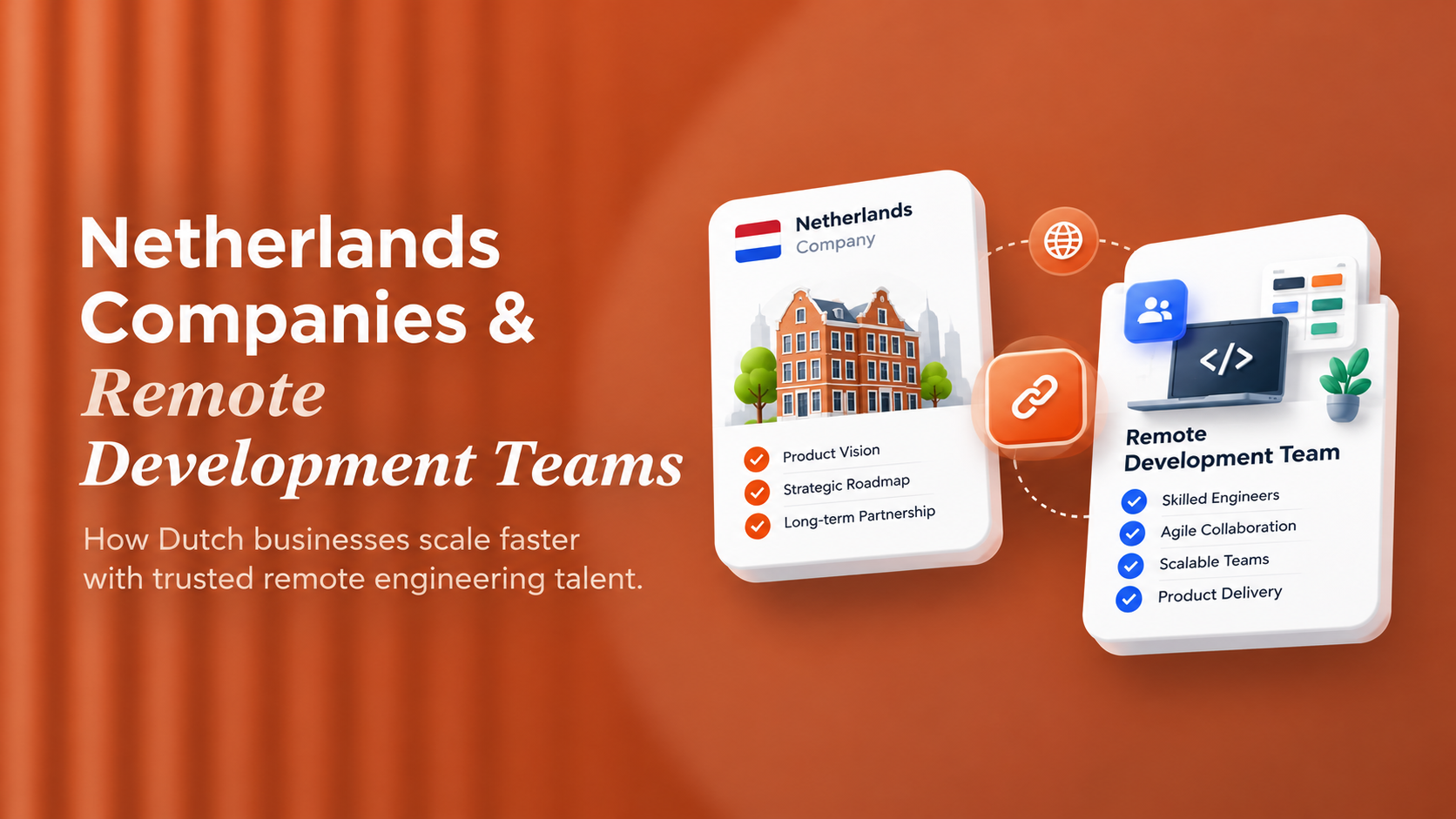
The Netherlands has near-universal English fluency and a persistent shortage of senior engineers in AI, MLOps and cloud infrastructure. Here is why Dutch companies are moving to remote development teams, and what to verify before committing.
HIPAA and GDPR overlap on security controls but diverge on consent, individual rights and breach notification timing. Here is the technical crosswalk, PHI handling architecture, BAA process and AI governance one dual-compliance HealthTech platform needs.
The quote on your desk is not the price of the software. This guide splits the real cost of custom software into CapEx vs OpEx treatment, annual maintenance benchmarks by software type, and a 3-year TCO model to build before a CFO signs off.




 We’re happy to sign an NDA upon request.