
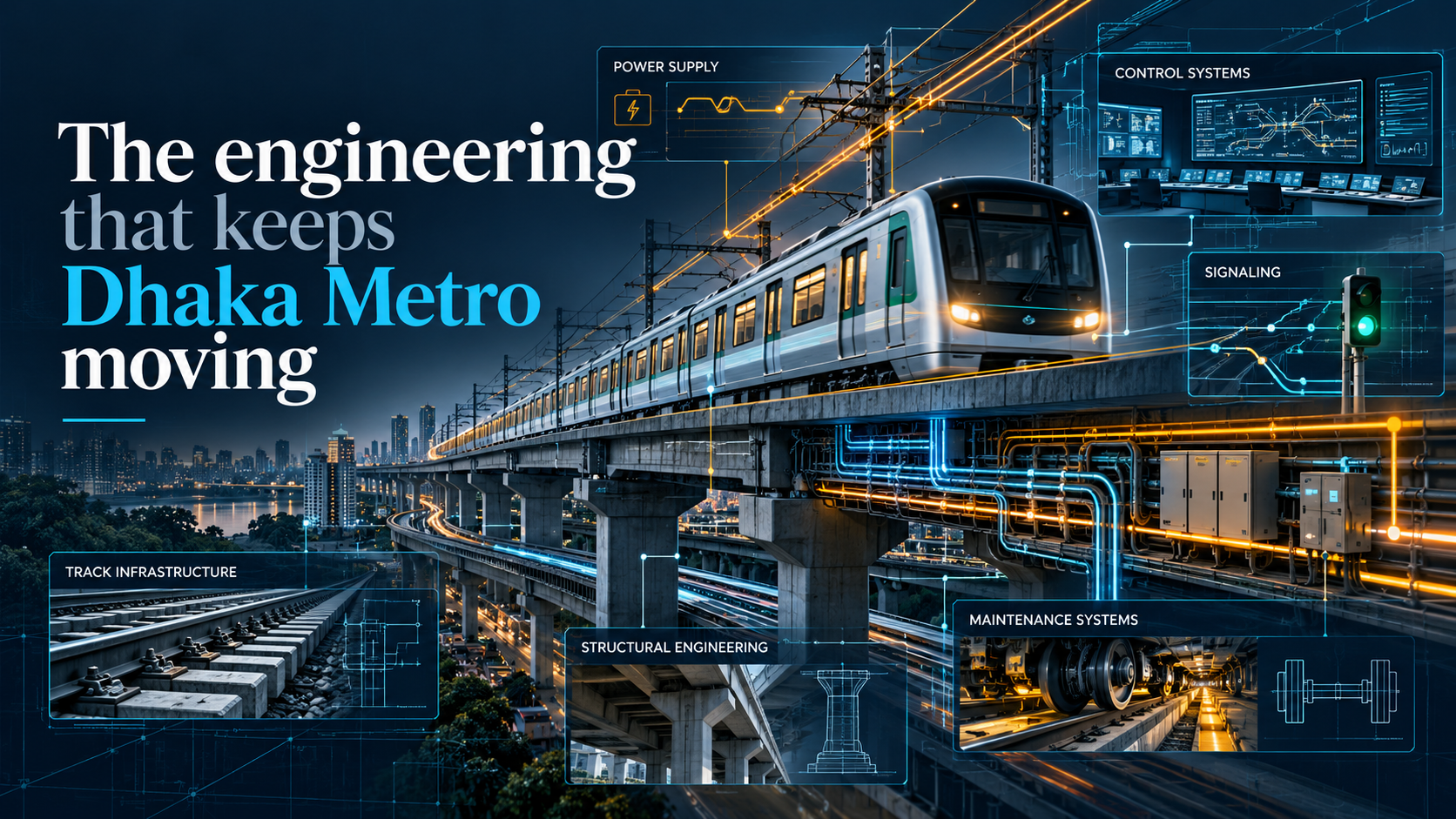
The Engineering That Keeps Dhaka Metro Moving
An in-depth technical analysis of Dhaka Metro Line 6 engineering: from 1500V DC overhead catenary power and regenerative braking to real-time CBTC signalling and SCADA systems.


 By Ebrahim Khan
4 min read
Quick Summary
For most Western companies weighing Bangladesh vs Eastern Europe for outsourcing in 2026, the short answer is that Bangladesh wins on raw hourly cost, while Eastern Europe wins on time zone overlap, English proficiency, and depth of senior talent. Which one actually makes sense depends on whether the project needs constant real-time collaboration with a European or US team, or whether it can run on async handoffs where a lower rate matters more than overlap. Below is the real, sourced data behind that trade-off, not just a general impression.
| Factor | Bangladesh | Eastern Europe (Poland / Ukraine) |
| Mid-level dev, hourly rate | $15–$30/hr | Poland $40–$70/hr; Ukraine $35–$45/hr |
| Senior dev, hourly rate | $25–$40/hr | Poland $45–$70/hr; Ukraine $45–$65/hr |
| National tech talent pool | 400,000+ tech professionals; 650,000+ active freelancers | Poland ~500,000–650,000 IT specialists; Ukraine ~300,000; CEE region 3.5M+ ICT specialists |
| EF English Proficiency Index 2025 | Rank 62/123 — score 506 (“Moderate”) | Poland: Rank 15/123 — 600 (“Very High”); Ukraine: Rank 45/123 — 526 (“Moderate”) |
| Time zone | GMT+6 (Bangladesh Standard Time) | GMT+1 / +2 (Poland CET; Ukraine EET) |
| Overlap with US East Coast hours | Minimal (~9–10 hrs ahead, near-opposite shift) | Partial (~6–7 hrs ahead, workable AM/PM overlap) |
| Overlap with Western Europe hours | Limited (usable mainly in EU evening) | Strong (same or ~1-hr offset) |
| Approx. savings vs. a US senior engineer | ~75–85% | ~55–70% |
Sources: EF English Proficiency Index 2025; Bangladesh ICT Division and BASIS talent figures; Alcor, Uvik Software, and Aalpha 2026 outsourcing rate surveys; Do IT in Poland and Dealroom/PFR talent pool reports.
Bangladesh’s blended rates for mainstream web and mobile work run roughly $15 to $30 an hour, with senior engineers reaching $25 to $40. Eastern Europe runs meaningfully higher, with Poland’s mainstream rates around $40 to $70 and Ukraine’s seniors at $45 to $65. A Bangladeshi team is typically 40 to 60 percent cheaper than a comparable Eastern European one. On rate alone, Bangladesh vs Eastern Europe for outsourcing isn’t close — Bangladesh wins by a wide margin.
Bangladesh’s tech workforce is large and growing fast: over 400,000 tech professionals and more than 650,000 active freelancers, expanding 15 to 20 percent a year. Eastern Europe’s pool is smaller per country but deeper at the senior end. Poland alone counts roughly 500,000 to 650,000 IT specialists, and Ukraine’s talent, despite wartime disruption, remains highly regarded for backend and data engineering work. On raw senior-engineer depth, this is where Bangladesh vs Eastern Europe for outsourcing tips the other way.
The EF English Proficiency Index 2025 puts Bangladesh at rank 62 of 123 countries, band “Moderate.” Poland ranks 15th, band “Very High,” and Ukraine ranks 45th, also “Moderate” but with a higher score than Bangladesh. Miscommunication risk on complex specs is generally lowest with a Polish team, moderate with a Ukrainian one, and something to actively manage with a Bangladeshi one, especially for client-facing roles.
Bangladesh sits at GMT+6, roughly 9 to 10 hours ahead of US East Coast hours, leaving almost no live overlap for American teams. Poland and Ukraine, at GMT+1 and GMT+2, overlap heavily with Western Europe and offer a workable early-morning or late-afternoon window for US teams. For projects that depend on daily standups with a European client, that gap often decides the choice over rate alone.
Base the choice on the shape of the work, not the sticker price. Bangladesh fits well-specified, async-friendly projects, MVPs, and long-running maintenance where cost matters most. Eastern Europe fits complex, senior-heavy builds needing tight, real-time collaboration or heavy English-language client interaction. Many companies blend the two: Eastern European seniors for architecture and client-facing work, Bangladeshi teams for well-scoped implementation at scale.
There’s no universal winner between Bangladesh vs Eastern Europe for outsourcing — the data shows two genuinely different value propositions, not one that’s objectively better. Bangladesh offers the steepest cost savings and a fast-growing talent base; Eastern Europe offers stronger English proficiency, deeper senior benches, and far better time zone overlap with Western clients. Match the choice to how much real-time collaboration the project actually needs, not just to the hourly rate on the page.
NOT SURE WHICH REGION FITS YOUR PROJECT? GeeksSort can scope your project against both talent markets and recommend a team structure — Bangladesh, Eastern Europe, or a blend of both — based on your timeline and collaboration needs. 🌐 geekssort.com
Yes, generally 40 to 60 percent cheaper at the mid and senior level based on 2026 blended hourly rates, though the gap narrows for highly specialized roles like AI/ML engineering.
Eastern Europe, by a clear margin. Poland and Ukraine sit 6 to 7 hours ahead of US East Coast time with a workable daily overlap window, while Bangladesh’s 9-to-10-hour gap leaves almost no shared working hours.
It’s a manageable one, not a disqualifying one. Bangladesh ranks “Moderate” on the EF English Proficiency Index 2025, below Poland and Ukraine, so clear written specs and a strong local team lead matter more than they would with a Polish team.
Yes, and many companies do — using Eastern European seniors for architecture and client communication while a Bangladeshi team handles well-scoped implementation at a lower blended rate.

An in-depth technical analysis of Dhaka Metro Line 6 engineering: from 1500V DC overhead catenary power and regenerative braking to real-time CBTC signalling and SCADA systems.
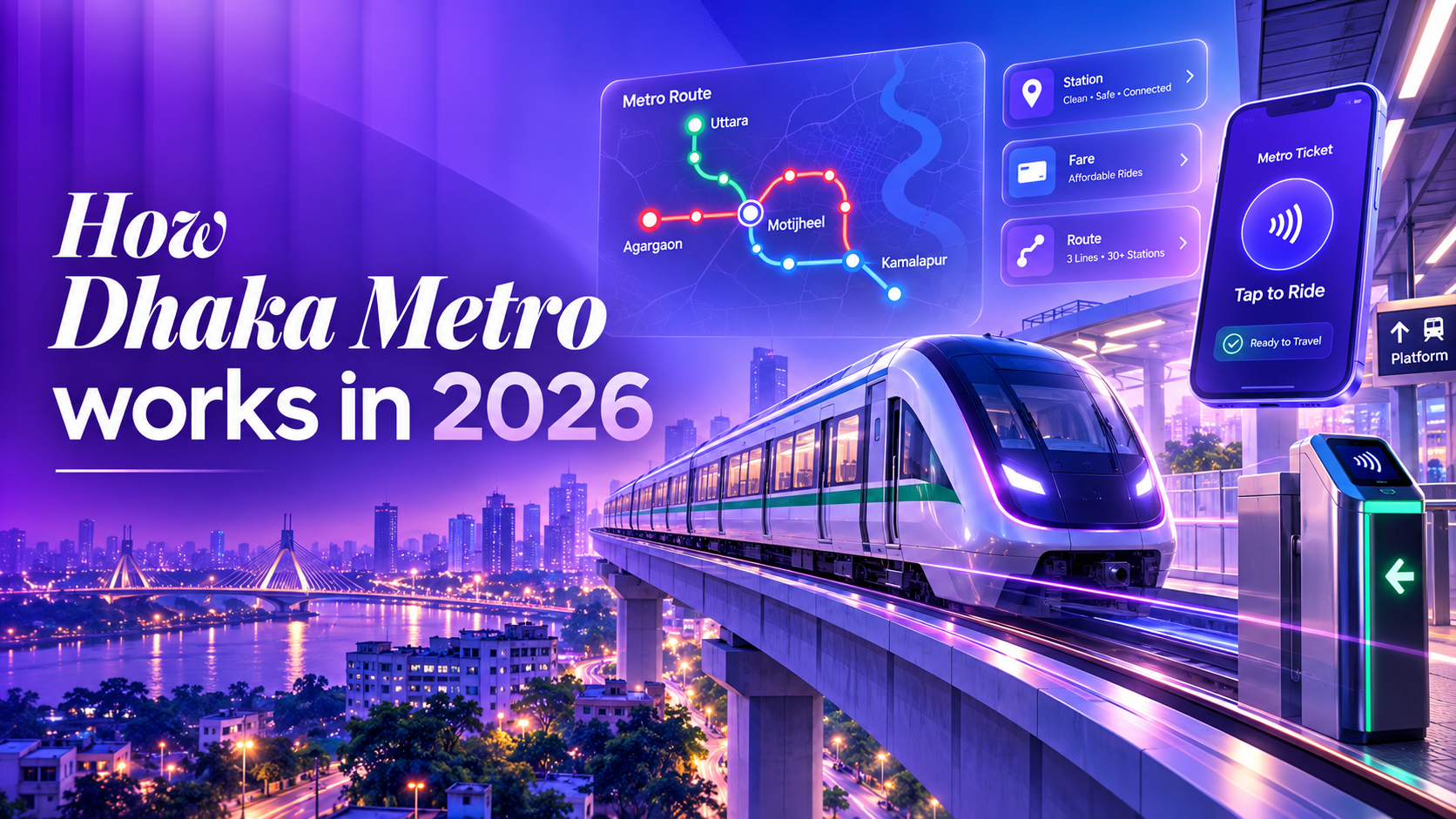
A complete technical and passenger guide to Dhaka Metro in 2026: from smart card ticketing, TVM recharge, and automated fare gates to CBTC signalling and train control.
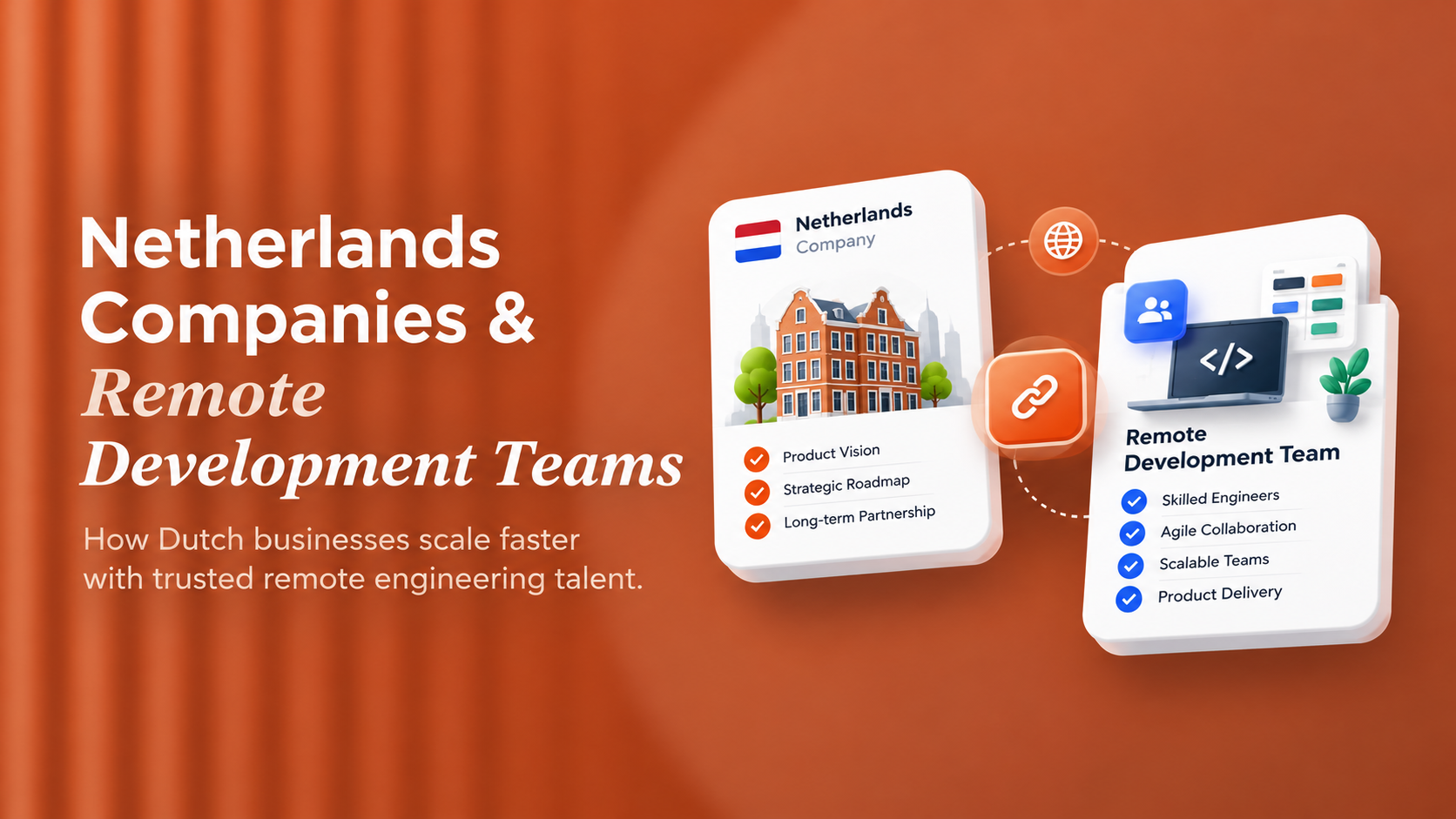
The Netherlands has near-universal English fluency and a persistent shortage of senior engineers in AI, MLOps and cloud infrastructure. Here is why Dutch companies are moving to remote development teams, and what to verify before committing.

Ebrahim KhanFounder & CEO
 We’re happy to sign an NDA upon request.