Looking for the best POS software in Bangladesh? This guide compares the top POS systems for retail stores, restaurants, pharmacies, supermarkets, wholesalers, and gyms. Explore key features, pricing, VAT/Mushak compliance, offline functionality, and industry-specific recommendations to choose the right POS solution for your business in 2026.
The best POS software in Bangladesh right now comes from a handful of established local vendors — Mediasoft, Managerium Retail ERP, Shohoz Software, AmarSolution, Sherazi POS, PridePOS, and Odoo POS all show up on most shortlists — but which one is actually right for you depends on your business type, branch count, and how closely you need to follow NBR’s VAT and Mushak invoicing rules. This guide walks retailers, restaurant owners, pharmacy operators, supermarket chains, wholesalers, and gym or martial-arts academy owners through what POS software actually does, which features are worth paying for, real pricing ranges in BDT, and a side-by-side comparison of the platforms that keep coming up in 2026.
What Is POS Software, and Why Does Every Bangladeshi Business Need One?
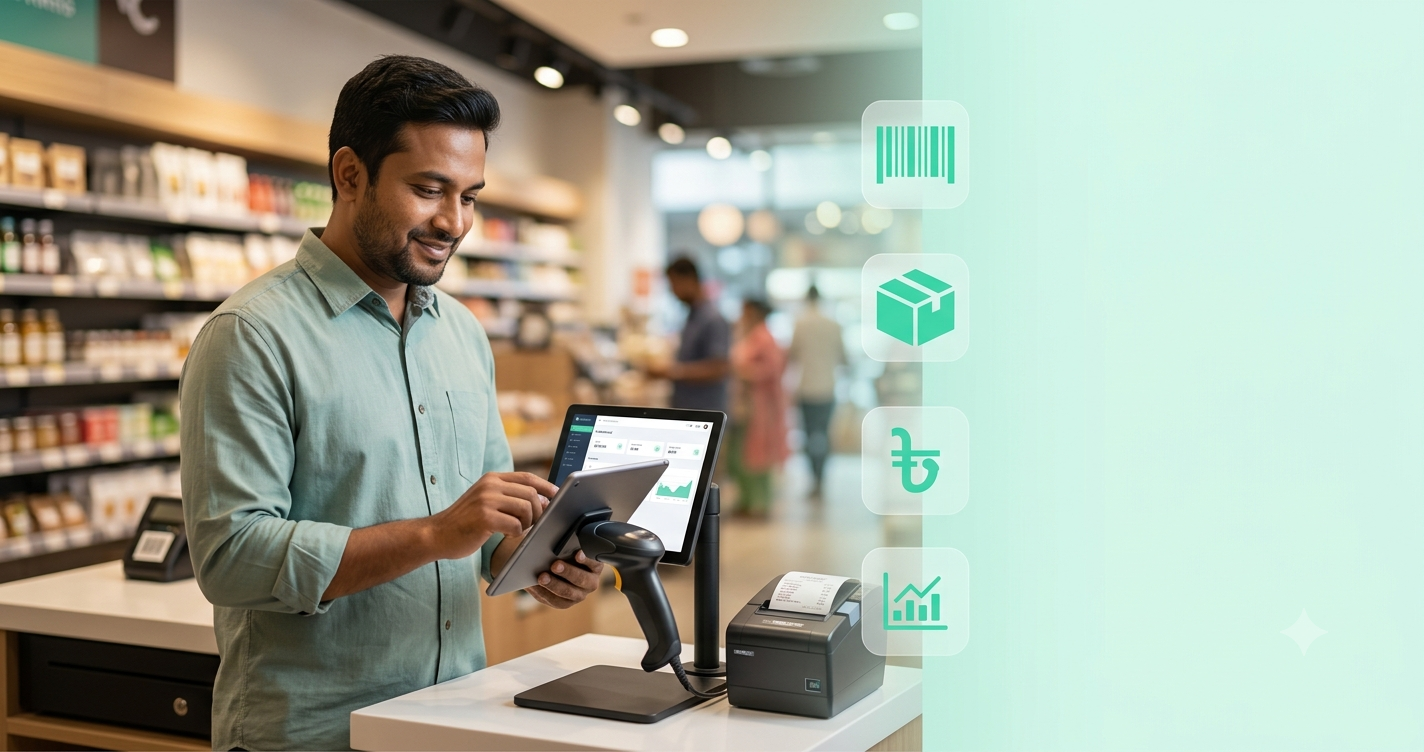
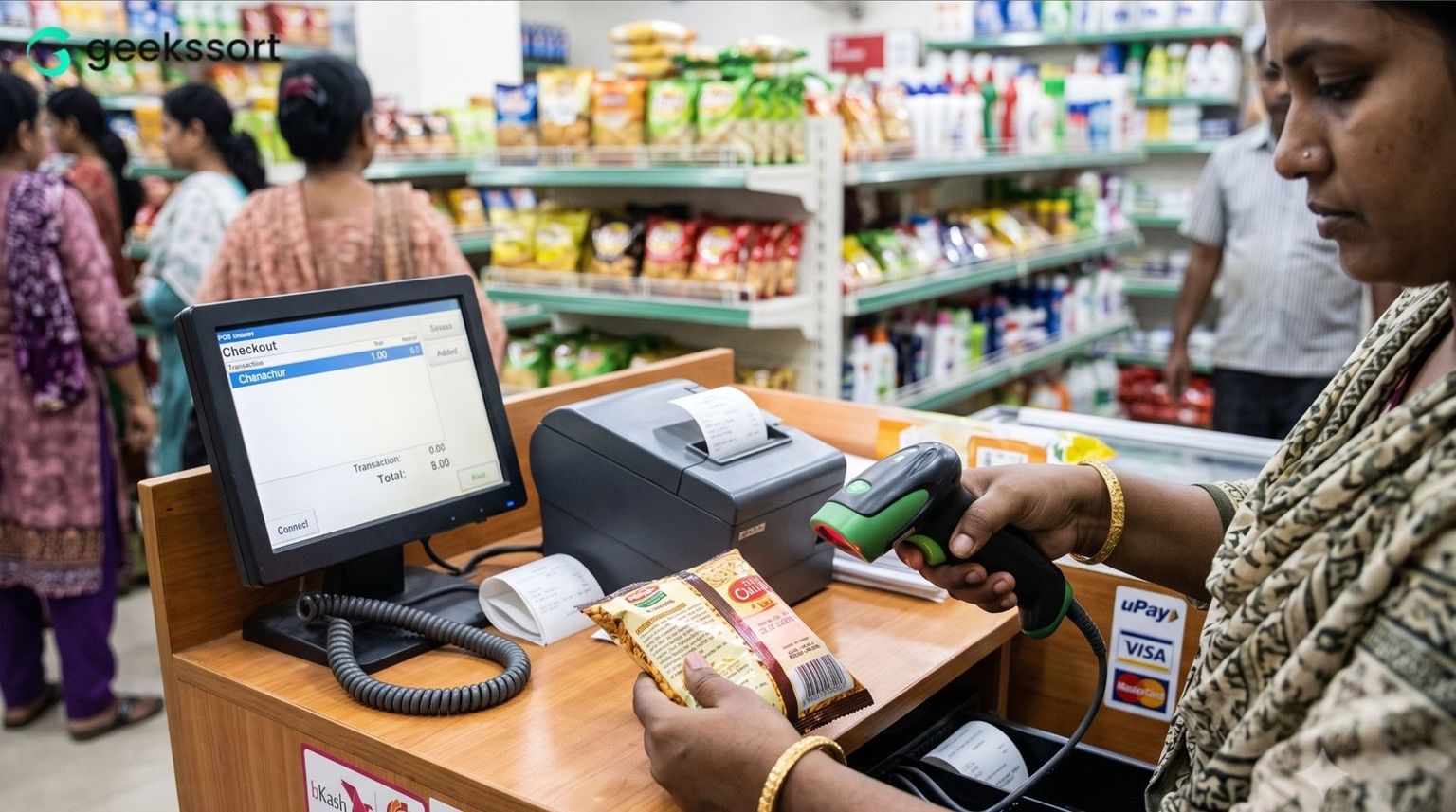
POS stands for Point of Sale — the software that runs at your checkout counter (or on a tablet, if you’re mobile) to record a sale, print or send a receipt, and update your stock in real time. In practice, it’s the single system tying together billing, inventory, VAT records, customer history, and sales reporting, replacing the cash-register-plus-notebook-plus-Excel setup that many Bangladeshi shops still run on.
This guide is written for owners and managers who are actually about to buy something, not just browse feature lists. If you run a retail shop, a supermarket, a restaurant, a pharmacy, a wholesale or distribution business, a fashion or electronics outlet, or a gym or martial-arts academy, the comparisons and pricing ranges below are built around your specific decision, not a generic checkout system.
What POS Software Actually Does
Processes sales and prints or sends digital receipts, including VAT-compliant Mushak invoices
Deducts sold items from stock automatically and flags low inventory before you run out
Tracks customer purchase history for loyalty programs and repeat-business marketing
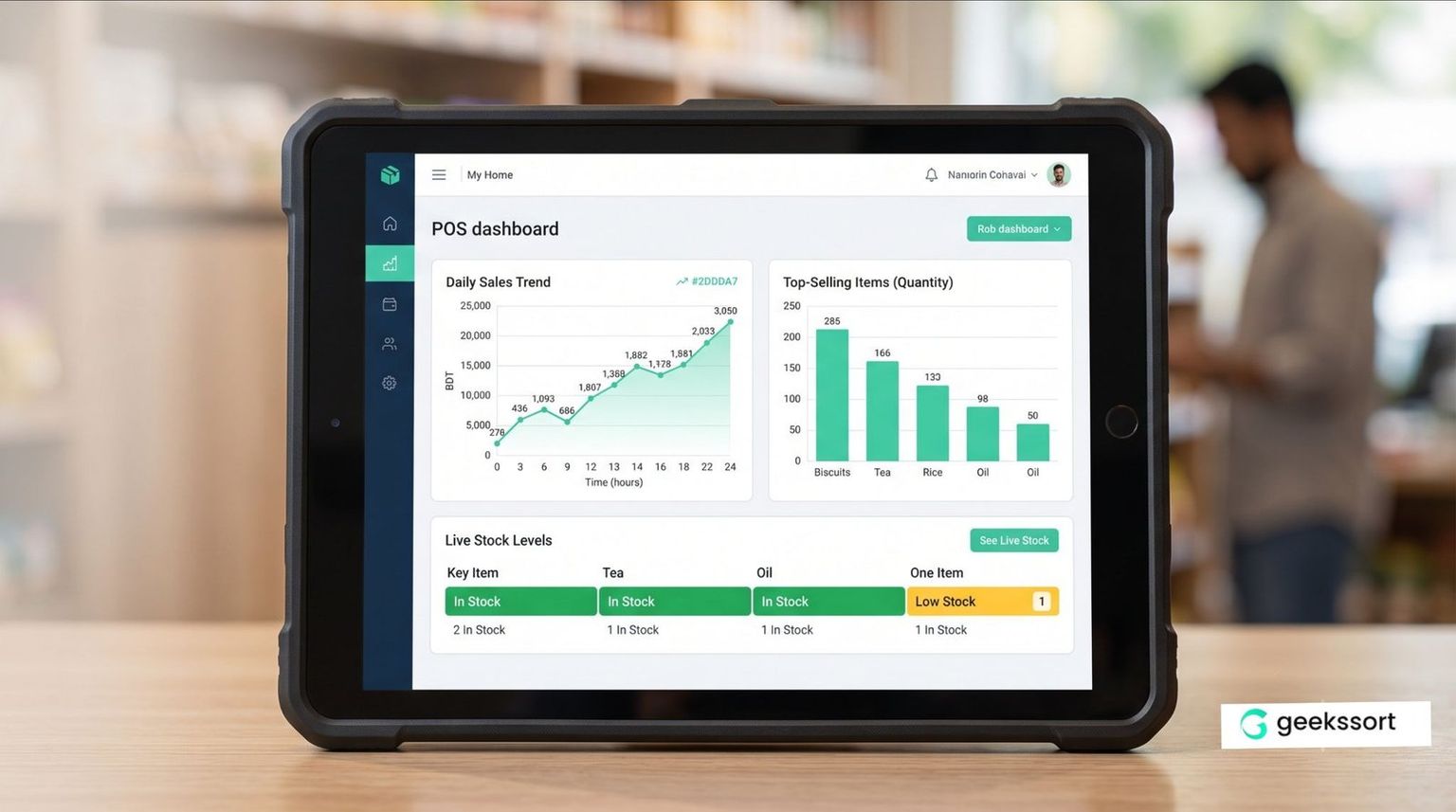
Generates daily, weekly, and monthly sales and profit reports without manual tallying
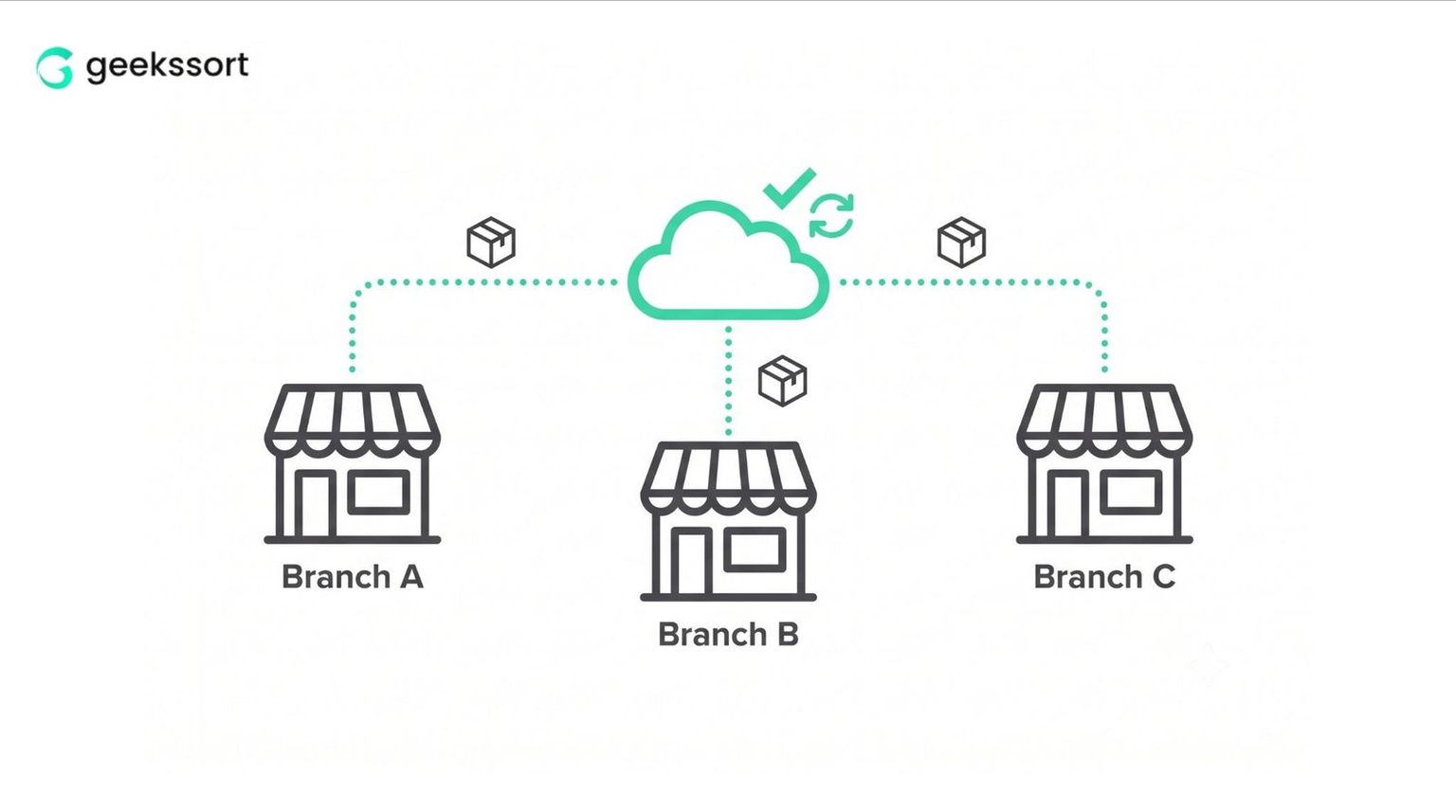
Syncs data across multiple counters or branches so owners see one unified picture
Why Bangladesh’s Retail Boom Makes POS Non-Negotiable
Supermarkets, pharmacy chains, fashion outlets, electronics shops, and fast-growing e-commerce brands are all expanding across Dhaka and beyond, and manual billing simply can’t keep pace with that volume. On top of the growth story, the National Board of Revenue (NBR) has pushed hard on digital tax enforcement — Electronic Fiscal Devices (EFD), Sales Data Controllers (SDC), and mandatory Mushak 6.3 tax invoices mean a business without proper POS-generated records is now exposed to real compliance risk, not just operational inefficiency.
The NBR’s Integrated VAT Administration System (IVAS) now cross-checks monthly Mushak 9.1 returns against sales and purchase records automatically, and mismatches get flagged without a human ever looking at the file. For a retailer, that means the sales register your POS produces isn’t just a convenience — it’s the paper trail that keeps a routine filing from turning into an audit.
Benefits of Using POS Software
Faster checkout — scan-and-go billing instead of manual price lookups
Fewer billing errors and less opportunity for cashier-side fraud or till shortages
Real-time stock visibility across every counter and branch
VAT-ready reporting that lines up with NBR’s Mushak 6.3 and Mushak 9.1 filing cycle
Centralized multi-branch control from a phone or laptop, even while traveling
Better customer insight — purchase history feeds loyalty programs and repeat marketing
Staff accountability through role-based permissions and shift-level sales logs
Key Features to Look for Before You Buy
Not every POS system covers the same ground, and the feature list you actually need depends heavily on your industry. That said, a handful of features separate a genuinely useful system from a glorified calculator:
Barcode scanning and label printing for fast, error-free billing
True offline mode — billing should continue during an internet outage and sync automatically once the connection returns
Built-in VAT and Mushak invoice generation that stays current with NBR rule changes
Multi-branch and multi-warehouse stock transfer, not just multi-branch reporting
Role-based staff permissions (cashier vs. manager vs. owner access)
Customer loyalty and CRM tools for repeat-business tracking
Supplier and purchase-order management for restocking
Real-time dashboard analytics rather than end-of-day-only reports
Hardware compatibility with the barcode scanners, thermal printers, and cash drawers you already own or plan to buy
Types of POS Software: Cloud, Desktop, and Hybrid
Cloud-Based POS
Cloud POS runs through a browser or app and stores data on remote servers, so owners can check sales and stock from anywhere — useful for multi-branch retailers and anyone who wants to manage the business without being physically present at the counter. The trade-off is a recurring subscription cost instead of a one-time license, and a dependence on the vendor’s server uptime for anything beyond basic local billing.
Desktop / On-Premise POS
Desktop systems install locally and don’t depend on an internet connection to function, which some single-location shop owners still prefer for reliability and one-time licensing costs rather than ongoing subscriptions. The downside is that remote access, automatic updates, and multi-branch consolidation are harder to bolt on later if the business grows past a single counter.
Hybrid (Offline-First) POS
Most serious Bangladeshi POS vendors now build hybrid systems: billing continues locally even when the internet drops, then syncs to the cloud automatically once connectivity is back. Given how common outages still are outside central Dhaka, this is arguably the single most important feature to test before buying.
Real Businesses Already Running on These Systems
It helps to look past feature lists at who is actually using these platforms day to day. Mediasoft counts pharmacy chains like Lazz Pharma and long-running retailers such as Tangail Saree Kutir among its client base, some of whom have run on the platform for over a decade. Sherazi POS points to supermarket and furniture-retail deployments — Green Super Market and Doyel Furniture among them — plus a multi-branch inventory rollout at Tarar Hat that reportedly cut stock-handling errors substantially. Shohoz Software’s customer base skews toward smaller retail and service businesses across Dhaka, Narayanganj, and Bogura, with owners citing faster daily reconciliation as the main day-to-day win.
The pattern across all of these examples is the same: the businesses that get the most value out of POS software are the ones that picked a system matched to their actual operation — a pharmacy chain needing batch and expiry tracking, a supermarket needing multi-branch stock transfer, a small shop just needing faster daily billing — rather than the single system marketed hardest to everyone.
Best POS Software in Bangladesh: Full Comparison Table (2026)
Here’s how the best POS software in Bangladesh compares once you line the major vendors up side by side — covering what each one is best known for, its standout features, and roughly what it costs.
Software (Vendor)
Best For
Standout Features
Approx. Pricing
Mediasoft POS (Mediasoft Data Systems Limited, operating since 1998)
Ranges roughly from BDT 10,000 for basic setups to well beyond BDT 2,00,000 for enterprise deployments
Odoo POS
Businesses that want deep customization and open-source flexibility
Free tier for single users, integrates natively with Odoo’s accounting, CRM, and e-commerce apps
Roughly BDT 3,500–20,000 per month through a local implementation partner
Nexchar POS
SMEs wanting a lightweight cloud-and-offline hybrid
Works on desktop and mobile, barcode scanning, loyalty program support
Competitive SME pricing, quoted on request
E-Hishab (Ehisab)
Super shops, pharmacies, and trading companies on a budget
Cloud-based, covers sales, inventory, accounts, and supplier management
Positioned as one of the more affordable cloud options
A few other names worth putting on a shortlist depending on scale and budget: Troyee POS and PinPOS for straightforward small-shop billing, Freshosoft POS and SK Soft Solutions for retail-plus-restaurant coverage, Dokane POS for lightweight single-counter use, and PrismERP for businesses that want a fully customizable, platform-independent ERP with a POS module built in.
Best POS Software in Bangladesh by Industry
Picking the best POS software in Bangladesh gets a lot easier once you stop comparing every vendor on every feature and instead match the shortlist to your specific industry.
Retail & Supermarkets
Supermarkets need fast barcode scanning, weighing-scale integration, and reliable multi-branch stock transfer. PridePOS, Managerium Retail ERP, and PinPOS all lean into this use case, with real-time inventory syncing across outlets so a stockout at one branch can be covered from another the same day.
For a single-outlet general store, though, all of that multi-branch machinery is overkill — a lighter system like AmarSolution or E-Hishab, focused on fast billing and simple stock alerts, usually gets the job done at a fraction of the setup effort.
Restaurants
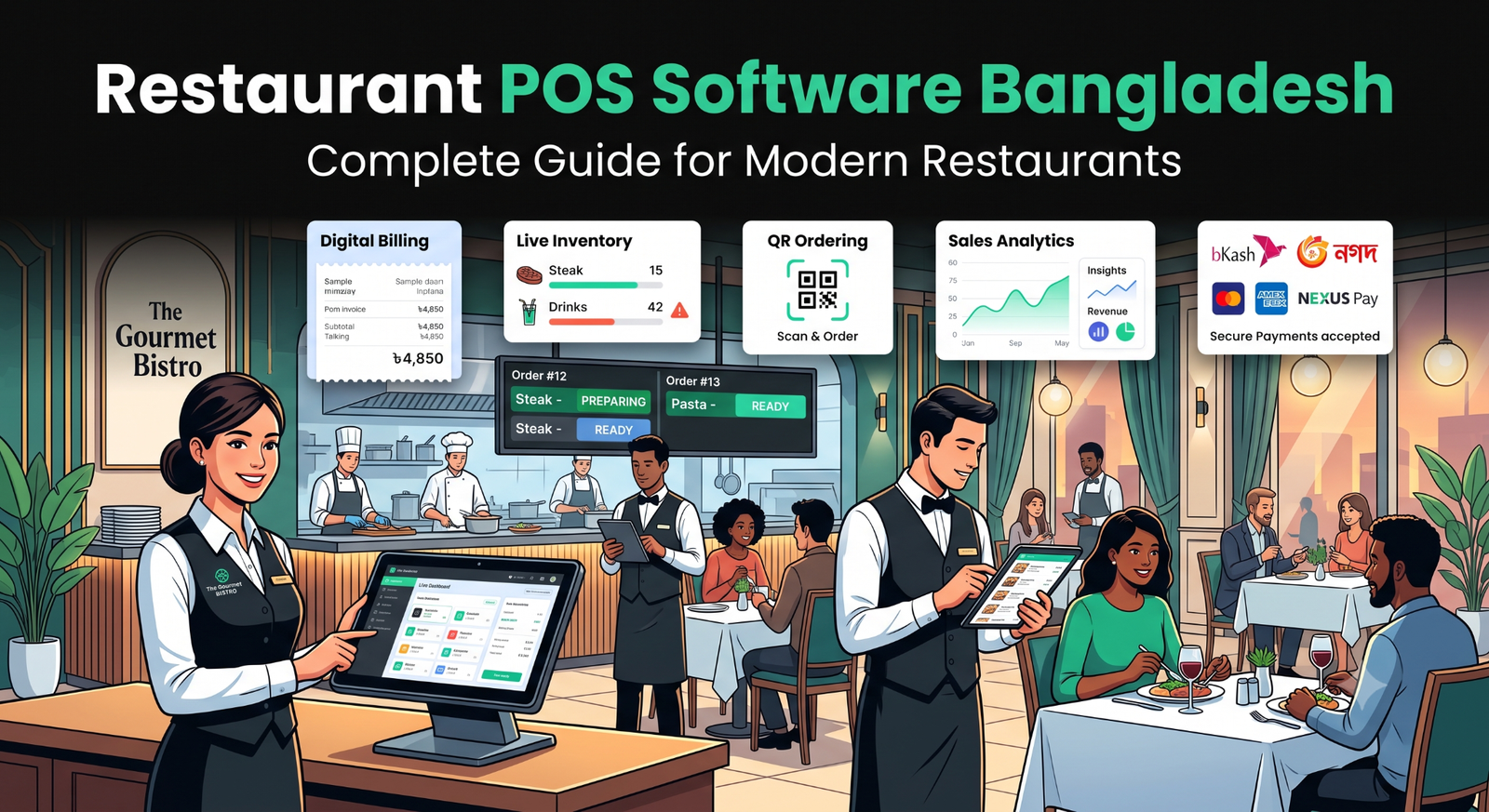
Restaurant billing needs table management, kitchen order tickets, and menu-level reporting rather than pure retail SKU tracking. Mediasoft, Shohoz Software, and Troyee POS all offer restaurant-specific modules covering exactly this workflow.
Chain restaurants with a central kitchen or commissary should also weigh how well the POS handles ingredient-level costing — knowing the food cost per dish, not just the sale price, is what actually protects margins as menu prices and raw material costs shift.
Pharmacies
Pharmacy billing has its own demands — batch and expiry tracking, prescription records, and strict VAT documentation. Mediasoft POS in particular has a long track record with pharmacy chains in Bangladesh, built on its multi-decade retail and healthcare software base.
Expiry-date alerts deserve special attention here: a pharmacy losing stock to expired medicine is losing money in a way a supermarket generally isn’t, so this is one vertical where it’s worth asking vendors for a live demo of the batch-tracking screen specifically, not just the general billing flow.
Fashion & Apparel
Apparel retailers need size- and color-variant tracking baked into the product catalog rather than bolted on. AmarSolution and SK Soft Solutions both support this kind of variant-level inventory alongside standard billing.
Seasonal collections also make markdown and end-of-season sale pricing a recurring need — check whether the system supports scheduled or bulk price changes rather than requiring every SKU to be edited by hand.
Wholesale & Distribution
Wholesalers care more about purchase orders, supplier ledgers, and bulk pricing tiers than counter-level speed. Managerium Retail ERP and Odoo POS both extend well into procurement and distribution, not just front-counter billing.
Credit-based B2B sales are common in distribution, so confirm the system can track partial payments and outstanding customer balances — a pure retail-style POS that assumes every sale is paid in full at the counter will fall short here.
Gyms & Martial Arts Academies
Fitness and martial-arts academies have a hybrid need: recurring membership billing plus point-of-sale for merchandise, supplements, and class add-ons at the front desk. This is the niche Fitssort — GeeksSort’s own SaaS product — is purpose-built for, tying member check-ins, class schedules, and front-desk sales into one system instead of stitching together a gym-management app and a separate POS.
General-purpose POS software can technically ring up a protein-bar sale, but it has no concept of a membership renewal date, a belt-rank test fee, or a class-capacity limit — which is exactly the gap a purpose-built academy platform is meant to close.
Data Security, Backups, and Who Actually Owns Your Sales Data
A POS system holds your sales history, customer contact details, and — increasingly — the exact records the NBR cross-checks during a VAT audit, so losing that data isn’t just inconvenient, it’s a compliance risk. Before signing with any vendor, ask three concrete questions: how often is data backed up, where is it stored, and can you export a full copy of your own records at any time without depending on the vendor’s cooperation.
Cloud vendors should be able to describe their backup frequency and server location in plain terms, not vague reassurance. Desktop and on-premise systems shift that responsibility onto the business itself, which means a local backup routine — an external drive, a second machine, or a scheduled cloud sync — needs to be part of the setup from day one, not an afterthought after the first hardware failure.
POS Software Pricing in Bangladesh: What to Expect
Pricing varies more by deployment scale than by brand name. As a rough guide: single-counter, small-shop setups typically start in the low tens of thousands of taka as a one-time cost, or a modest monthly cloud subscription. Multi-branch retail setups with inventory-sync and accounting modules land in the mid-range, usually billed per branch per month. Enterprise ERP-grade deployments — the Managerium and PridePOS enterprise tiers, or a fully customized Odoo rollout — can run well beyond BDT 2,00,000 in setup and licensing, with ongoing monthly or annual support fees on top. Always ask vendors to break down setup cost, per-branch monthly cost, hardware cost, and support-renewal cost separately — a single bundled number tends to hide which part of the price actually scales with your growth.
Hardware is a separate line item most first-time buyers forget to budget for: barcode scanners, thermal receipt printers, cash drawers, and card-payment terminals typically aren’t bundled into the software quote. If a vendor’s price sounds unusually low compared to competitors, ask directly whether hardware, installation, staff training, and the first year of support are included or billed separately — that’s usually where the gap gets made up later.
Local Support and Bangla-Language Considerations
Software quality only matters if your staff can actually use it day to day. A cashier who’s comfortable in Bangla but gets handed an English-only interface will make more mistakes, not fewer, in the first few weeks — so multilingual screens aren’t a nice-to-have, they’re a training-time and error-rate issue. Several local vendors, including Mediasoft, explicitly market multilingual support across data-entry screens for exactly this reason.
Response time matters just as much as language. When a till goes down during peak evening shopping hours, a vendor with a Dhaka-based support line that answers in minutes is worth more than a marginally cheaper system backed by an overseas call center with a multi-hour response window. Ask any vendor directly what their average support response time looks like, and ask for it in writing rather than taking a sales rep’s verbal estimate.
How to Choose the Best POS Software in Bangladesh for Your Business
Once you’ve narrowed the field, choosing the best POS software in Bangladesh for your specific business comes down to running through a short, practical checklist rather than picking whichever vendor pitches hardest.
Map your workflow first — single counter, multi-branch, or online-plus-offline hybrid
Confirm VAT/Mushak 6.3 invoicing and NBR EFD/SDC compliance out of the box
Test offline billing during an actual power or internet outage before signing
Look for role-based staff permissions so cashiers and managers see different views
Ask about local support response time and whether training is included
Compare true total cost — setup, per-branch monthly fees, hardware, and support renewal — not just the headline price
Request a live demo loaded with your actual product catalog, not a generic sample dataset
Common Mistakes Bangladeshi Businesses Make When Buying POS Software
Even with a long vendor list to choose from, most bad purchases in this category come down to a handful of repeat mistakes rather than a lack of options for the best POS software in Bangladesh.
Choosing on price alone and skipping the VAT/Mushak compliance check entirely
Never testing the offline mode before an internet outage exposes the gap
Ignoring multi-branch stock sync needs until a second location is already open
Underestimating staff training time and change management
Assuming the vendor will automatically update for NBR/SRO tax rule changes without confirming it in writing
Overlooking hardware compatibility with existing barcode scanners and printers
Final Take
There’s no single universal answer to which is the best POS software in Bangladesh — a busy pharmacy chain, a single-counter fashion boutique, and a martial-arts academy front desk each need a genuinely different feature set. What matters is matching the shortlist to your actual workflow: confirm VAT and Mushak compliance up front, insist on a real offline-mode test, compare total cost rather than a headline number, and run a live demo with your own product catalog before signing anything. Vendors like Mediasoft, Managerium Retail ERP, Shohoz Software, AmarSolution, Sherazi POS, PridePOS, Odoo POS, Nexchar, and E-Hishab all cover different corners of the Bangladeshi market well — the right one is simply the one that fits how your business actually runs.
BOOK A FREE DEMONeed help comparing POS systems, integrating one with your existing accounting stack, or building a custom billing solution from scratch? GeeksSort designs and develops software for retail, restaurant, and fitness businesses across Bangladesh — including Fitssort, our own academy-management platform for gyms and martial-arts schools.📞 +880 1869-454674 🌐 geekssort.com
FREQUENTLY ASKED QUESTIONS
What is the best POS software in Bangladesh in 2026?
There isn’t one single best option for every business — Mediasoft, Managerium Retail ERP, Shohoz Software, AmarSolution, Sherazi POS, PridePOS, and Odoo POS are the names that come up most often, and the right pick depends on your industry, branch count, and budget.
Is POS software mandatory for VAT-registered businesses in Bangladesh?
POS software itself isn’t legally mandatory for every business, but VAT-registered businesses are required to issue proper Mushak 6.3 tax invoices, and the NBR has pushed hard on Electronic Fiscal Devices (EFD) and Sales Data Controllers (SDC) for retail chains, which makes compliant POS software effectively necessary in practice.
Does POS software in Bangladesh work without internet?
The better hybrid systems do — billing continues locally during an outage and syncs to the cloud automatically once the connection returns. Always test this specifically before buying, since outages are still common outside central Dhaka.
How much does POS software cost in Bangladesh?
Small single-counter setups often start in the low tens of thousands of taka, multi-branch retail packages are typically billed per branch per month, and full ERP-grade deployments can run well beyond BDT 2,00,000 in setup plus ongoing support fees.
Which POS software is best for pharmacies in Bangladesh?
Mediasoft POS has one of the longest track records with pharmacy chains in Bangladesh, with batch and expiry tracking and VAT-ready documentation built into its pharmacy-specific module.
Can one POS system manage multiple branches in Bangladesh?
Yes — Managerium Retail ERP, PridePOS, and Odoo POS are all built for centralized multi-branch control, letting owners transfer stock between locations and view consolidated sales from one dashboard.
Poor retail visibility hides lost sales. Learn how a connected retail POS system brings sales, stock, customers, and branches into one view, and which daily checks turn those reports into decisions.
Learn how to build an MVP that investors will actually fund by validating key assumptions with real user data, focusing on traction instead of unnecessary features.





 We’re happy to sign an NDA upon request.