
Custom Ecommerce vs SaaS: Which Is Right for You?
Compare custom ecommerce vs SaaS across cost, control, integrations, and growth. Choose the platform that fits your retail business.


 By Ebrahim Khan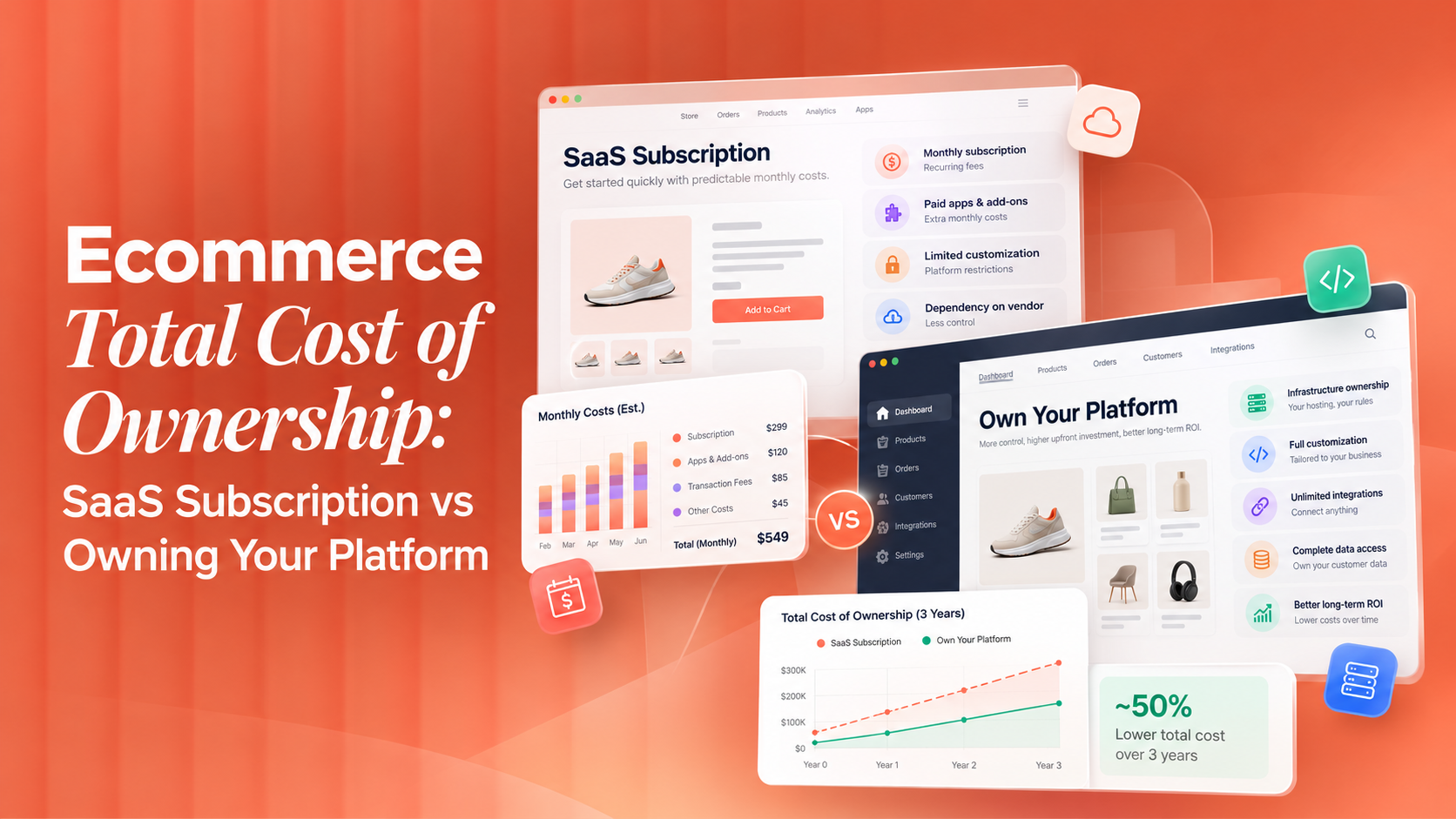
8 min read
Key Takeaways
Many businesses compare ecommerce platforms by looking at the monthly price. That is understandable, but it is incomplete.
Ecommerce total cost of ownership includes every cost required to run, maintain, and improve the system over time.
This includes subscription fees, apps, transaction charges, hosting, development, maintenance, integrations, staff time, and operational errors.
A platform that looks cheap at first can become expensive as the business grows. A custom system that looks expensive at first can become more efficient over time.
This article explains how to calculate ecommerce total cost of ownership. It also compares SaaS subscriptions with owning your own commerce platform.
Total cost of ownership, or TCO, is the full cost of using a system over a period of time.
It is not only the price you pay the software provider. It includes every direct and indirect cost needed to keep the business running.
For ecommerce, TCO includes platform fees, payment processing, apps, hosting, development, maintenance, support, data migration, and staff training.
It also includes hidden costs. These include manual data entry, reporting delays, stock errors, refund handling, and lost sales caused by poor systems.
A clear TCO view helps founders make better decisions. It shows whether a platform is truly affordable.
SaaS platforms usually have predictable monthly fees. This makes budgeting simple in the beginning.
A business may pay a platform subscription, payment processing fees, and charges for premium apps.
The cost often rises with growth. Higher sales volume, more staff accounts, advanced features, and additional integrations can increase the bill.
Apps are a major source of growing cost. A retailer may add apps for reviews, upselling, loyalty, inventory, accounting, SMS, delivery, and reporting.
Each app may have its own monthly fee. Some also charge based on orders, users, or usage.
These fees are easy to approve one at a time. Together, they can become a significant monthly expense.
The bigger issue is not always the app fee. It is the operational cost of fragmentation.
Staff may need to update stock in one system and sales in another. Managers may export reports from several dashboards and combine them manually.
Customer service teams may need to check multiple tools to answer a simple question. Finance teams may need to reconcile data from different sources.
These tasks consume time. They also increase the chance of mistakes.
A stock mismatch can cause overselling. A reporting gap can hide a profit problem. A failed integration can delay orders.
These problems do not appear as software fees. But they are real costs.
When calculating ecommerce total cost of ownership, include the cost of staff time and operational errors.
A custom platform requires a larger upfront investment.
The business pays for discovery, UX design, development, quality assurance, migration, hosting setup, and launch.
The exact cost depends on complexity. A simple custom store costs less than a full commerce operating system with POS, inventory, accounting, and mobile apps.
Custom development also requires ongoing investment. The business needs maintenance, security updates, backups, monitoring, and feature improvements.
These costs should be planned from the beginning. A custom system without a maintenance plan can become risky.
But the investment buys something important. The business gains control over its workflows, data, and future roadmap.
A custom system can reduce costs that SaaS stacks often create.
It can bring the website, POS, inventory, accounting, and reporting into one database. This reduces duplicate entry and manual reconciliation.
Staff can see accurate stock in real time. Managers can see sales, cash, profit, and returns in one dashboard.
This saves time. It also reduces errors, refunds, and customer complaints.
A custom system can also replace multiple paid apps. Instead of paying for separate tools, the business can build only the features it needs.
This does not mean custom is always cheaper. It means custom can be more efficient when complexity is high.
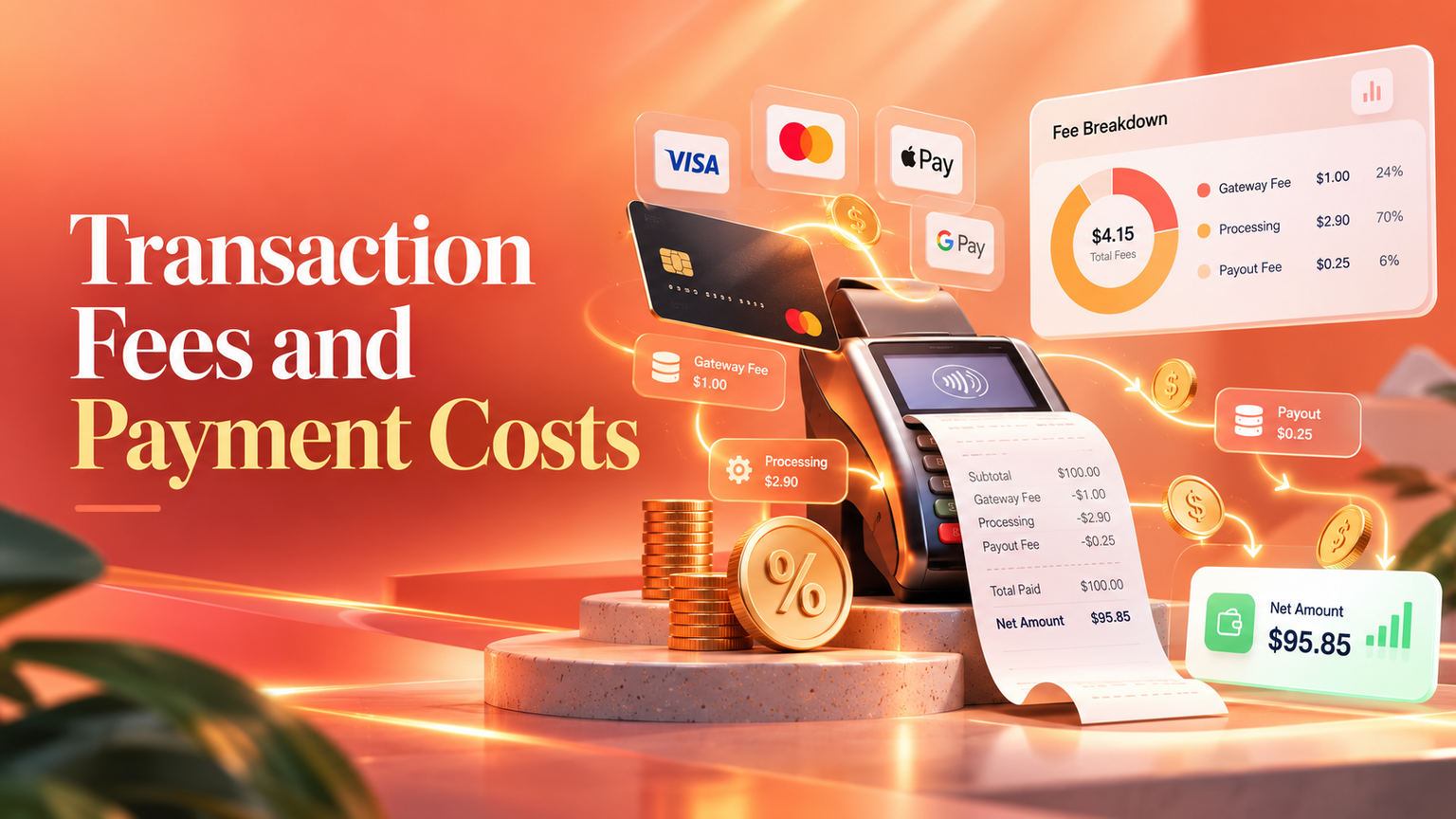
Payment processing is a major ecommerce cost. It exists in both SaaS and custom systems.
Some SaaS platforms charge additional transaction fees unless you use their preferred payment provider. These fees can reduce margin as sales grow.
A custom platform can integrate directly with local payment providers, banks, mobile wallets, or cash on delivery workflows.
This can reduce fees in some markets. It can also improve checkout flexibility.
When comparing platforms, calculate payment costs based on real sales volume. A small percentage difference can become large over time.
Every ecommerce system needs maintenance. The difference is who handles it.
With SaaS, the provider handles core hosting, security, and platform updates. The business still manages apps, themes, content, and integrations.
With custom, the business or its development partner handles maintenance. This includes server management, security patches, backups, monitoring, and bug fixes.
Custom maintenance is a real cost. But it should be compared with the cost of managing many SaaS apps and integrations.
A well-maintained custom system can be stable and predictable. A poorly maintained one can create downtime and security risks.
Choose a development partner with a clear support and maintenance process.
Switching platforms is expensive. It requires data migration, design changes, testing, staff training, and SEO protection.
This is why businesses should think beyond the first year.
A SaaS platform may be easy to start with. But moving away later can be difficult if workflows and data are deeply tied to apps.
A custom system can be easier to evolve if it is built with clean architecture and proper documentation.
The goal is not to avoid change forever. The goal is to avoid a costly rebuild every time the business grows.
Imagine a retailer using a SaaS platform with several apps.
The business pays a platform subscription. It also pays for inventory, POS, accounting, SMS, reviews, and reporting apps.
It pays payment processing fees. Staff spend hours each week exporting reports and correcting stock data.
The business may also lose sales when stock information is wrong. These losses are part of TCO.
Now imagine a custom system with online store, POS, inventory, accounting, and reporting connected to one database.
The upfront cost is higher. But staff spend less time on manual work. Reports are accurate. Stock errors decrease.
Over several years, the custom system may deliver better value for a complex retailer.
Start by listing every tool in your current ecommerce stack.
Include the website platform, POS, inventory tool, accounting software, SMS provider, delivery system, review app, and reporting tool.
Record the monthly or yearly cost of each tool. Include transaction fees and usage-based charges.
Then estimate staff time. Calculate how many hours per week your team spends on manual updates, report preparation, and error correction.
Add the cost of errors. Include refunds, lost sales, stock mismatches, and customer service time.
Finally, include future costs. Will you need more apps, more staff accounts, or more integrations as you grow?
This simple exercise often reveals the real cost of a platform.
SaaS often has the lower total cost for simple businesses.
If you sell online only, have a small catalog, and use standard workflows, SaaS can be very efficient.
It removes the need for servers, developers, and complex maintenance. The business can focus on marketing and sales.
SaaS is also a good choice for testing a new market. The business can launch quickly and learn before making a larger investment.
The key is to review app costs regularly. Remove tools that no longer add value.
Custom often has the lower total cost for complex retailers.
This includes businesses with physical counters, multiple branches, large catalogs, local payment needs, or detailed reporting requirements.
It also includes businesses that depend on many apps to perform basic operations.
A custom system can reduce app fees, manual work, and integration risk. It can also give the business a system that matches its exact workflow.
For these businesses, custom is not a luxury. It can be the more economical long-term choice.
One common mistake is comparing only the first-year cost. A platform decision affects several years of operations.
Another mistake is ignoring staff time. Manual work is a real cost, even if nobody invoices for it.
Some businesses forget about app fee increases. Prices can change as usage grows.
Others ignore the cost of errors. A single repeated stock mistake can cost more than a monthly app fee.
Finally, many businesses ignore switching costs. Moving platforms later can be expensive and disruptive.
A good TCO calculation looks at three years, not one month.
Ecommerce total cost of ownership is about more than the monthly subscription.
It includes apps, payment fees, development, maintenance, staff time, errors, and future growth costs.
SaaS is often cheaper to start. Custom can be cheaper to operate when the business becomes complex.
Do not choose a platform based on the first invoice. Choose it based on the full cost of running your business.
It is the full cost of running an ecommerce system over time. It includes subscription fees, apps, payment costs, development, maintenance, staff time, and operational errors.
Shopify is usually cheaper to start. A custom platform may cost less over time for complex retailers that use many apps and manual processes.
Include staff time, manual data entry, reporting delays, stock errors, refunds, integration failures, and lost sales.
No. Custom platforms need hosting, maintenance, security, backups, and feature updates. These costs should be planned from the beginning.
Review costs at least every six months. Review immediately when app fees rise, sales grow, or operational problems increase.

Compare custom ecommerce vs SaaS across cost, control, integrations, and growth. Choose the platform that fits your retail business.
Shopify limitations can slow growing retailers. Learn when a SaaS store is enough and when custom commerce systems make more sense.
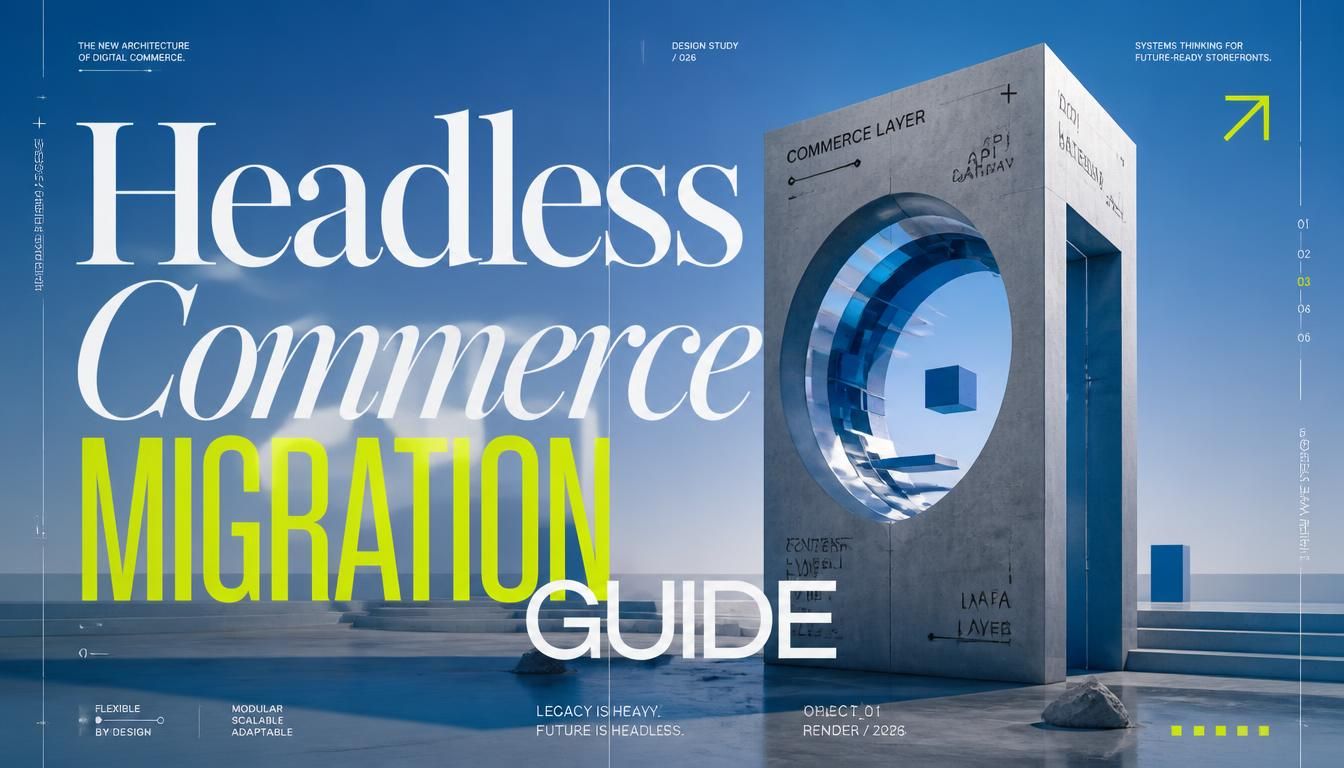
Headless ecommerce separates the customer facing experience from commerce back office systems, allowing teams to release faster, personalize journeys, and optimize every device without replacing the core commerce engine.

Ebrahim KhanFounder & CEO
 We’re happy to sign an NDA upon request.