
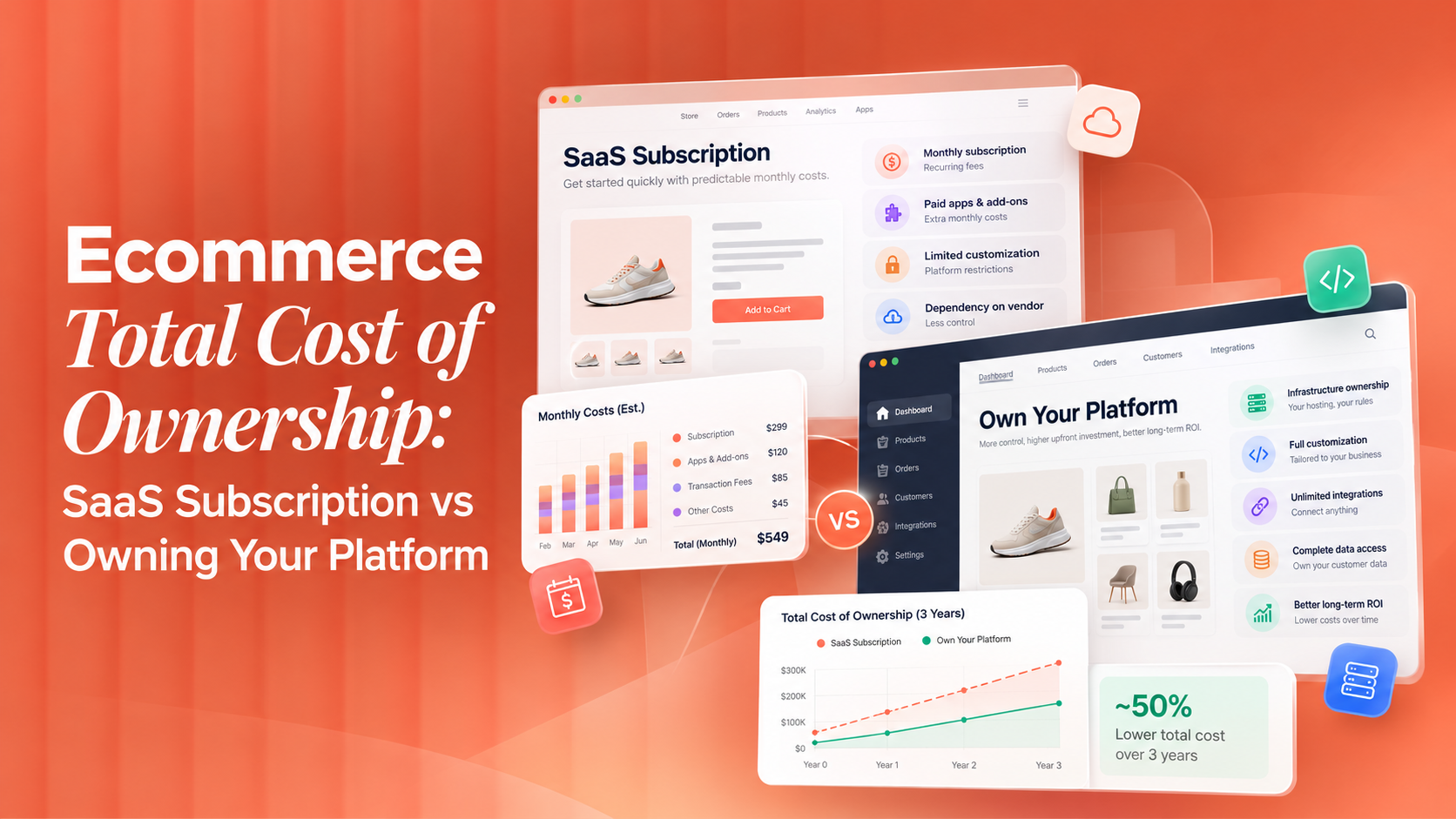
Ecommerce Total Cost of Ownership: SaaS Subscription vs Owning Your Platform
Ecommerce total cost of ownership includes more than subscription fees. Compare SaaS and custom platform costs before you choose.


8 min read
Key Takeaways
Many retailers use separate tools for their website, counter, inventory, and accounts. Each tool may work well alone.
The problem appears when the tools do not share the same data.
A product may be available online but already sold at the counter. A sale may exist in the POS but not in accounting. A manager may need three reports to understand daily profit.
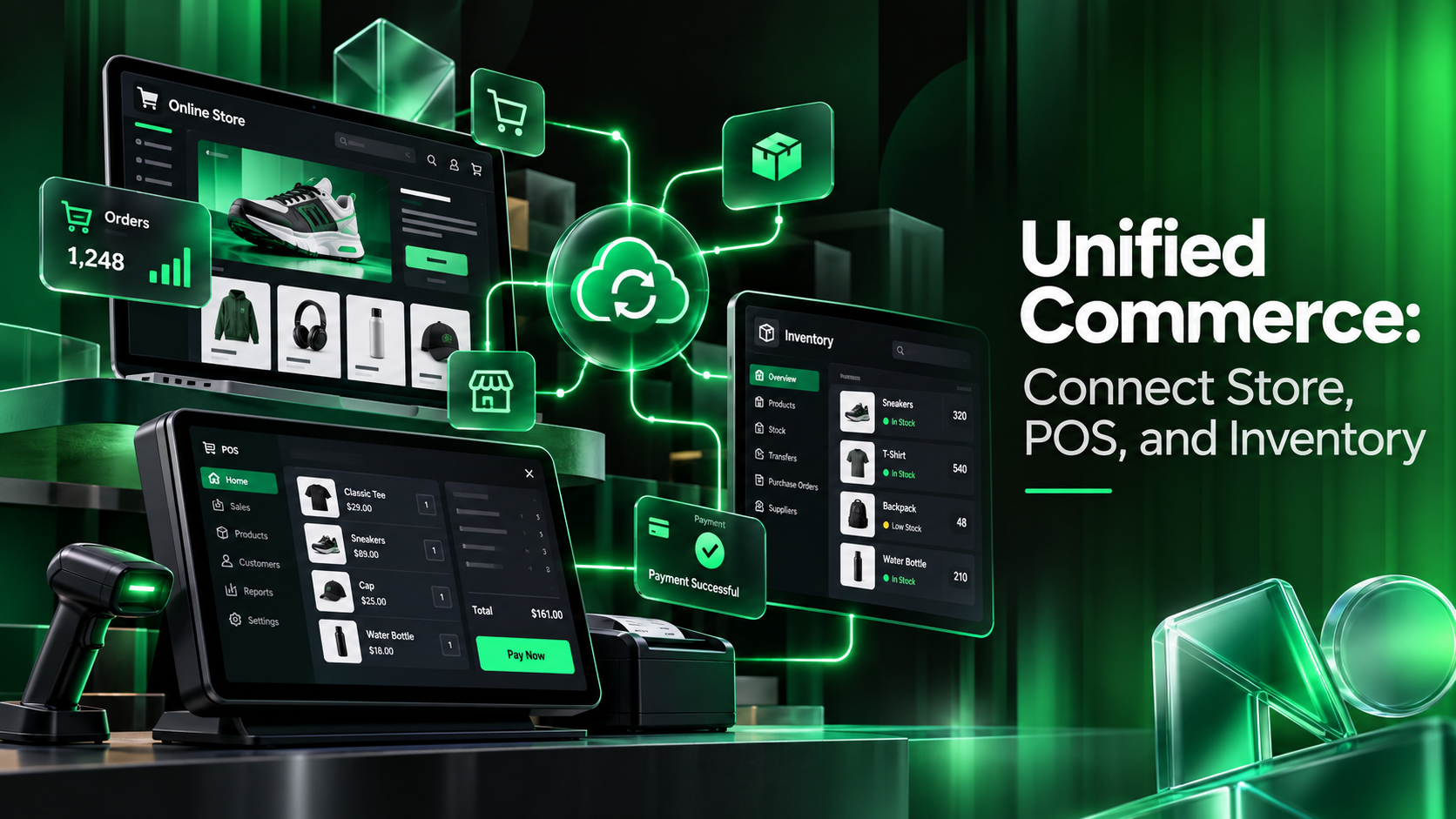
A unified commerce platform solves this problem. It connects online sales, physical sales, stock, customers, payments, and accounting in one system.
This article explains what unified commerce means. It also explains why growing retailers need it.
Unified commerce means all sales channels and business operations use one connected system.
The online store, physical counter, warehouse, mobile app, and accounting module read from the same database.
When a customer buys online, the stock updates immediately. When the counter sells an item, the online store reflects the change.
When a return happens, inventory, payment records, and accounting reports update together.
This creates a single source of truth. Everyone in the business sees the same information.
Unified commerce is different from simply connecting a few tools. It is a deeper level of integration.
Disconnected systems create gaps. Those gaps become bigger as the business grows.
A retailer may use one platform for the website, another for POS, another for inventory, and another for accounting.
Staff must update each system separately. This creates duplicate work.
It also creates delays. Stock may only update at the end of the day. Reports may only be ready after manual work.
Errors become common. A product may show in stock when it is not. A sale may be recorded twice. A return may not reach the accounting system.
These problems reduce trust in the data. When managers cannot trust reports, they make slower decisions.
Inventory sync is one of the strongest reasons to use a unified commerce platform.
Online and offline sales should reduce the same stock count. There should be one accurate stock level for every product.
This prevents overselling. It also prevents missed sales when an item is available at another branch.
For example, a customer may want a product that is out of stock online. The system can show that it is available at a nearby counter.
Staff can check stock across branches in seconds. They do not need to call another store or check a spreadsheet.
This improves customer service. It also improves stock planning.
A POS system should not be a separate island.
When POS is connected to the same database, counter sales update online stock immediately. Returns, discounts, credit sales, and payment records flow into the same system.
This is important for retailers with both online and physical sales.
A staff member at the counter can see the same product information as the website. They can check price, stock, batch number, expiry date, and customer history.
Managers can see total sales across channels. They do not need to combine website reports with counter reports.
This makes daily operations faster and more accurate.
Many retailers discover financial problems at the end of the month. By then, correcting errors is difficult.
A unified commerce platform can record sales, returns, payments, expenses, and stock movements in real time.
Accounting does not need to wait for manual entry. The system can update revenue, cash, credit, VAT, and profit automatically.
This gives owners daily visibility.
They can see how much cash is in the counter. They can see which products are profitable. They can see which branches need attention.
Real-time accounting is not just convenient. It helps prevent cash flow problems.
Customers notice when systems are disconnected.
They may order a product online and receive a call saying it is unavailable. They may return an item and wait days for a refund. They may receive generic messages that do not match their purchase history.
A unified system improves these experiences.
Staff can see the customer’s orders, returns, preferences, and communication history. They can answer questions quickly.
The business can also send useful messages. For example, it can remind a customer to refill a product based on their actual purchase cycle.
This is more helpful than a generic abandoned cart email.
A unified commerce platform gives owners better reports.
Instead of checking several dashboards, they can see one view of the business.
The dashboard can show online sales, counter sales, stock levels, cash position, credit sales, returns, VAT, and profit.
It can also show branch performance, staff performance, and product performance.
This helps owners answer important questions quickly.
Which products are selling? Which branches are profitable? Which products are low in stock? Which customers have not returned?
When data is connected, decisions become faster and more confident.
Many retailers add apps to solve individual problems. One app manages reviews. Another manages loyalty. Another manages SMS. Another manages accounting.
This creates complexity.
Each app has its own login, settings, cost, and support team. Data may not flow smoothly between them.
A unified platform can replace several disconnected tools. It can include the features the business actually needs.
This reduces cost, training time, and technical risk.
It also makes it easier to add new branches, products, or sales channels.
Internet connectivity is not always reliable. A retail counter cannot always depend on a stable connection.
An offline-first POS can continue selling even when the internet drops. It can store transactions locally and sync when the connection returns.
This is essential for many retail environments.
A unified commerce platform can make this possible. The counter, website, and central database stay connected when the network allows it.
When the connection returns, the system updates stock, payments, and reports automatically.
This prevents lost sales and manual reconciliation.
Unified commerce is valuable for many types of retailers.
It is especially useful for health and beauty stores, pharmacies, grocery stores, electronics retailers, fashion brands, and multi-branch businesses.
These businesses often need batch numbers, expiry dates, branch stock, supplier records, credit sales, and detailed reporting.
They also need accurate stock across online and offline channels.
A simple online-only store may not need this level of integration. But a growing retailer with physical operations usually does.
Start by mapping your current workflow.
List every system you use. Include the website, POS, inventory tool, accounting software, delivery platform, and spreadsheets.
Identify where data is entered twice. Identify where staff must switch systems. Identify where reports are delayed.
Then prioritize the biggest problem. For many retailers, that problem is inventory sync or accounting visibility.
Do not try to change everything at once. Build a roadmap.
First connect the most important operations. Then add reporting, automation, and customer communication features.
Do not treat unified commerce as only a website project. It is an operations project.
Do not connect systems without cleaning old data first. Bad product or customer data creates new problems.
Do not ignore staff training. A powerful system fails when the team does not know how to use it.
Do not try to build every feature at once. Start with inventory, POS, and reporting.
Do not forget offline operations. A counter must keep working when the internet is unstable.
Finally, do not measure success only by website sales. Measure accuracy, speed, returns, cash visibility, and customer satisfaction.
Disconnected systems may work in the early stage. They become expensive as the business grows.
A unified commerce platform connects online and offline sales with inventory, accounting, and reporting.
It gives retailers one stock count, one customer view, and one source of truth.
If your team spends too much time fixing data, combining reports, or checking stock, it may be time to unify your commerce operations.
Mobile apps can make unified commerce more practical for staff and customers.
Store staff can use a mobile app to check stock, process orders, and update product information. Managers can approve discounts, review cash position, and monitor branch performance remotely.
Customers can also benefit from a simple app experience. They can track orders, view purchase history, reorder products, and receive refill reminders.
A mobile app should use the same database as the website and counter. This prevents separate customer records and inconsistent stock data.
For example, a customer may buy a product at the counter and later reorder it online. The system should recognize the same customer and show relevant purchase history.
This creates a smoother experience across channels.
Mobile apps are not required for every retailer. But they become valuable when staff need mobility or customers reorder frequently.
After implementing unified commerce, measure clear business outcomes.
Track stock accuracy, overselling incidents, order processing time, refund processing time, and report preparation time.
Also track customer-focused metrics. These include repeat purchase rate, delivery success rate, support response time, and customer satisfaction.
Compare results before and after implementation.
A successful unified commerce platform should reduce manual work and improve data confidence. It should also make it easier to open new branches or add new sales channels.
If staff still spend hours combining reports, the system may not be truly unified.
It is a system that connects online sales, POS, inventory, customers, payments, and accounting in one database. All channels use the same data.
Multichannel selling means selling in many places. Unified commerce means those channels share one connected system and one source of truth.
Yes. When online and counter sales update the same stock count, the system can show accurate availability in real time.
It can. A strong unified commerce platform records sales, returns, payments, VAT, and stock movements in the accounting module.
No. It is useful for any retailer with online and offline sales. It becomes especially valuable with multiple branches or complex inventory.
Ecommerce total cost of ownership includes more than subscription fees. Compare SaaS and custom platform costs before you choose.
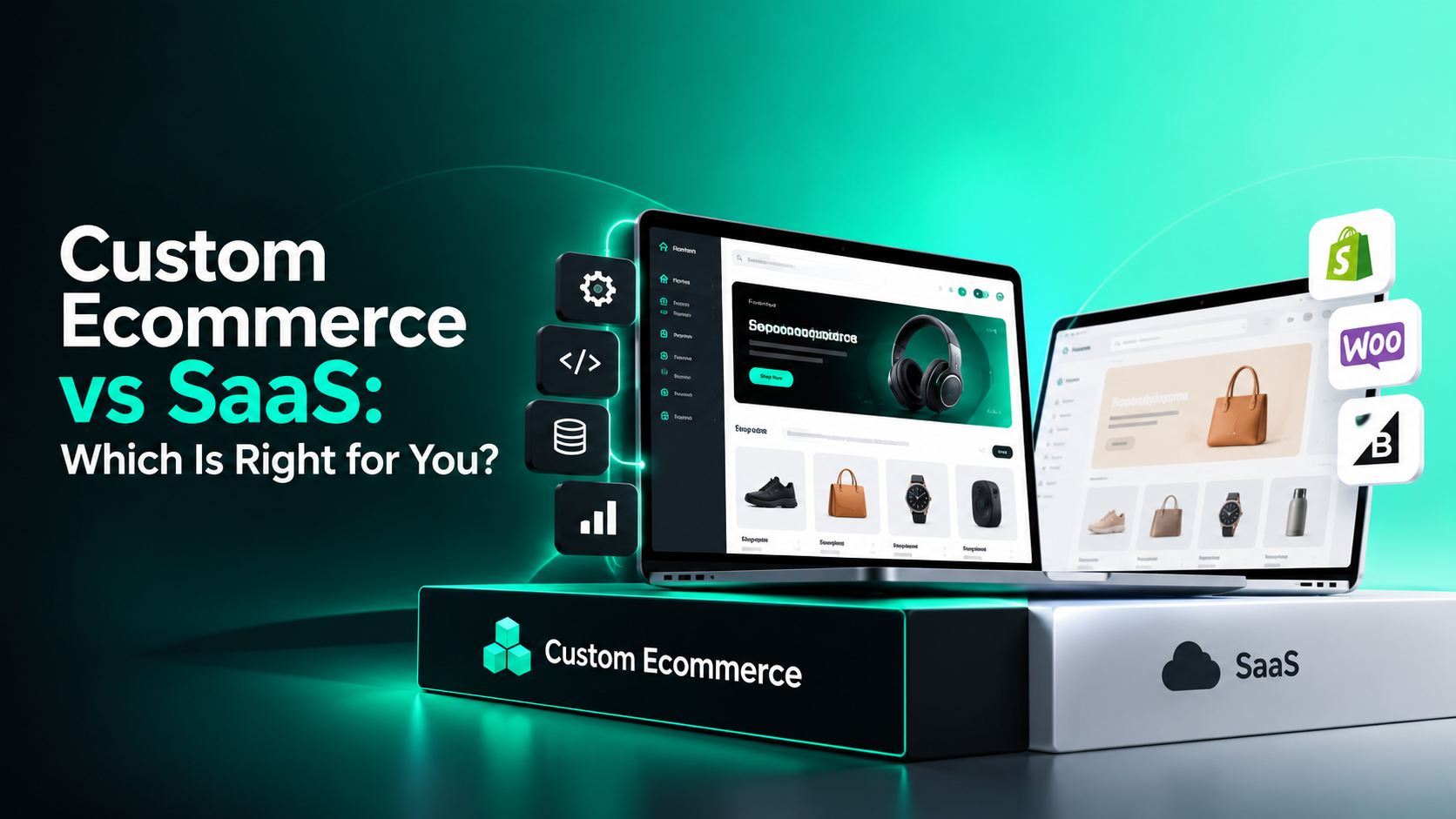
Compare custom ecommerce vs SaaS across cost, control, integrations, and growth. Choose the platform that fits your retail business.
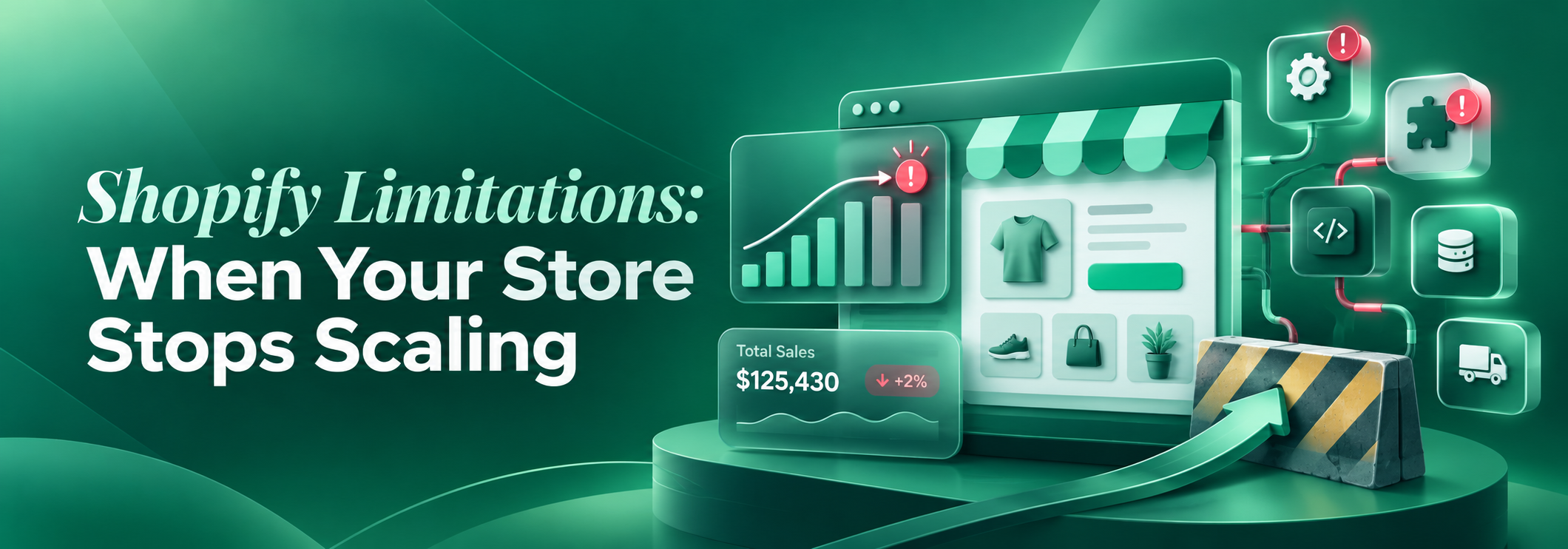
Shopify limitations can slow growing retailers. Learn when a SaaS store is enough and when custom commerce systems make more sense.

Ebrahim KhanFounder & CEO
 We’re happy to sign an NDA upon request.