


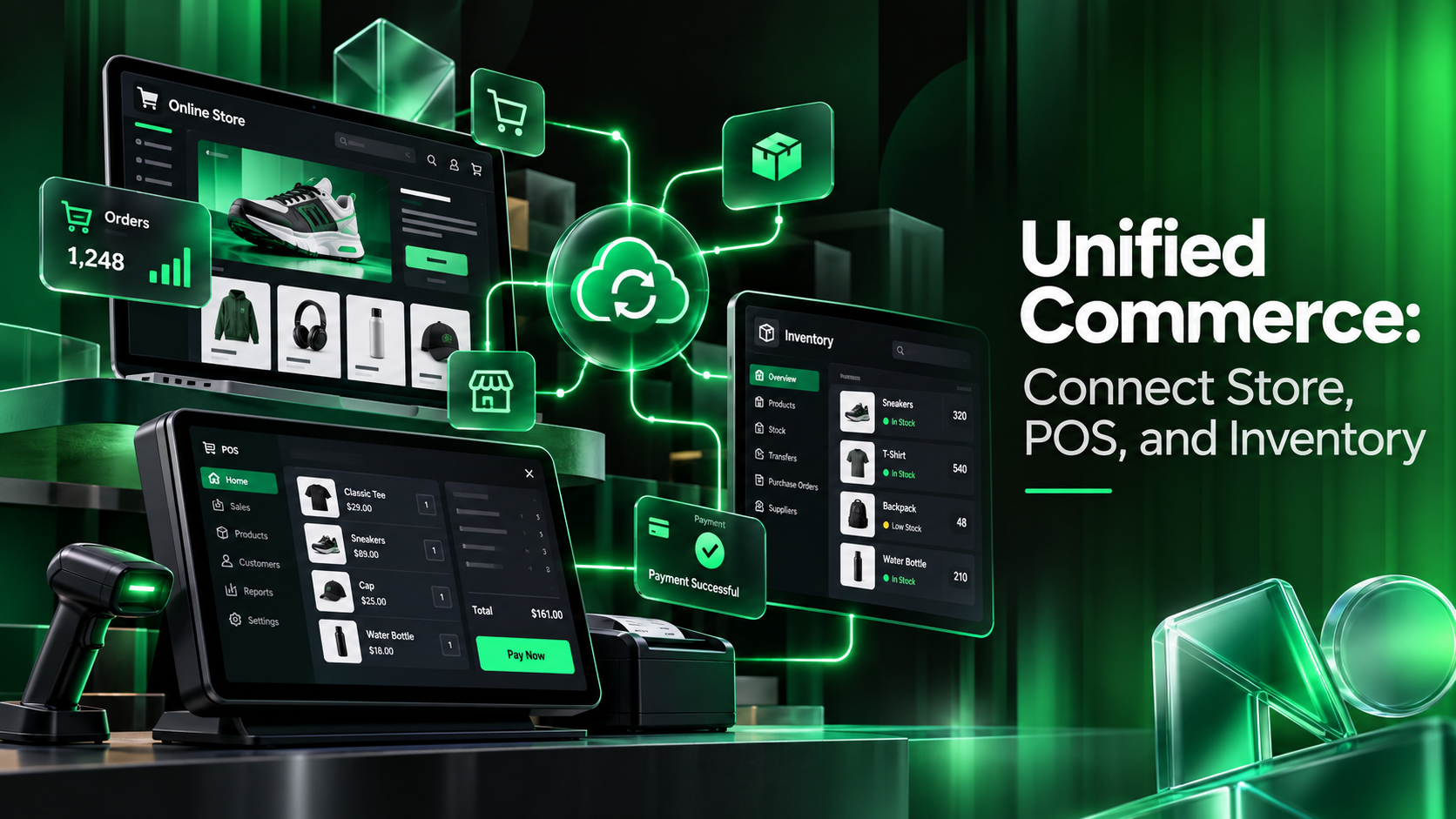
Unified Commerce: Connect Store, POS, and Inventory
A unified commerce platform connects your online store, POS, inventory, and accounting. Reduce double entry and see accurate business data.


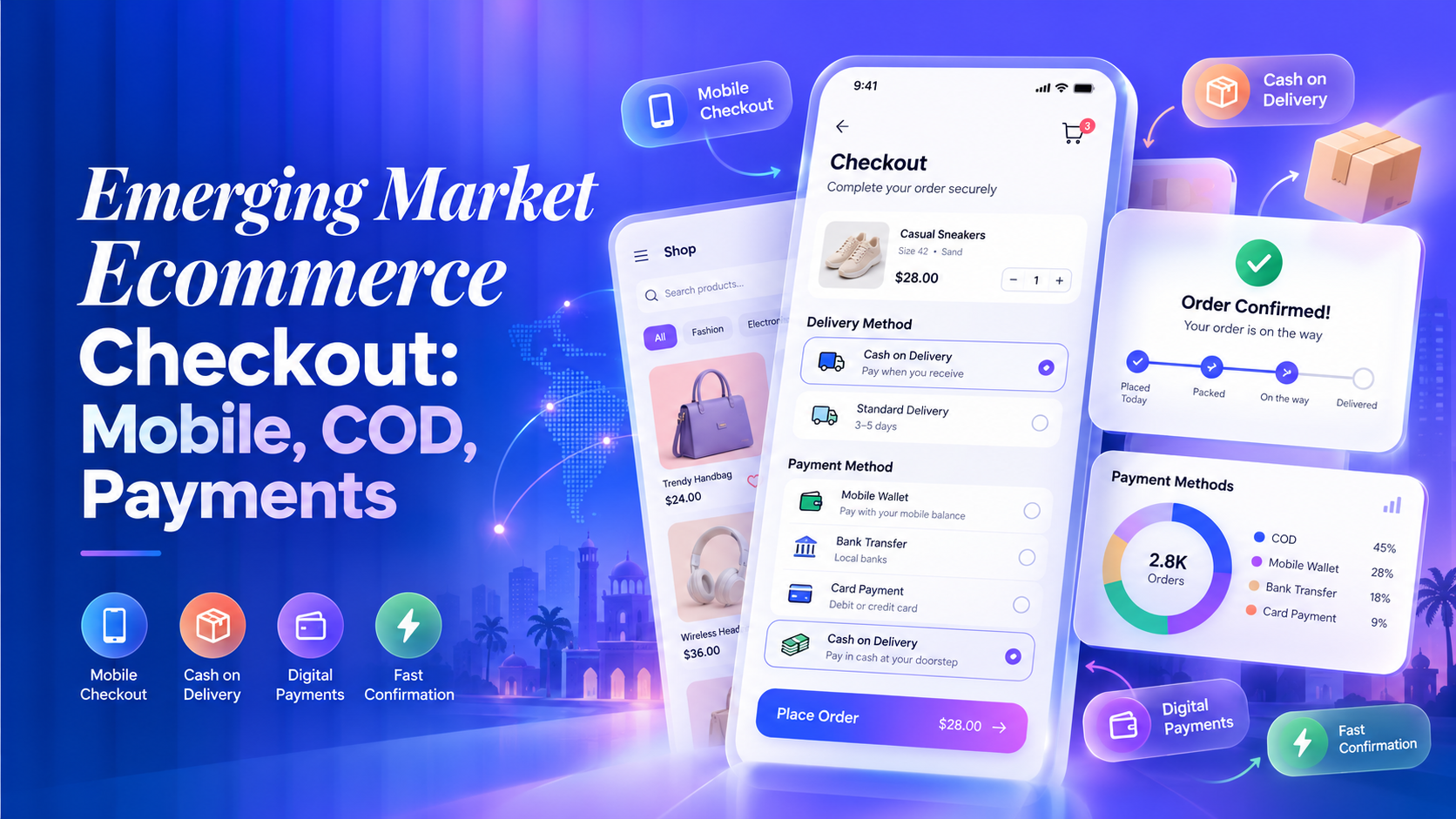
8 min read
Key Takeaways
Many ecommerce checkout flows are designed for markets where customers use email and credit cards. That model does not fit every country.
In many emerging markets, customers prefer mobile numbers, cash on delivery, and local payment methods. Trust and convenience matter more than advanced design.
An emerging market ecommerce checkout should reflect how people actually buy. It should reduce friction, build confidence, and support local behavior.
This article explains how to design a checkout for these markets. It covers mobile number identification, cash on delivery, local payments, delivery communication, and repeat purchases.
A standard checkout often asks for an email address, shipping address, and card details.
This works well for customers who trust online payments. It works less well where card usage is low or trust in online sellers is limited.
Customers may abandon checkout because they do not want to enter card details. They may avoid the process because they prefer to pay after receiving the product.
Some customers may not use email regularly. Others may share an email address with family members.
These are not small issues. They affect order completion, customer communication, and repeat purchases.
A checkout should not force customers to follow a foreign buying pattern. It should match local habits.
In many markets, the mobile number is more important than the email address.
Customers use it for communication, delivery updates, payment confirmation, and customer support. It is also easier to remember.
Make mobile number entry the first step in checkout. Allow customers to sign in or continue using their phone number.
Use OTP verification where appropriate. This confirms that the number belongs to the customer.
A mobile-first checkout can reduce form fields. It can also make account creation feel easier.
For example, a customer can enter a phone number, receive a code, and continue directly to delivery and payment.
This is simpler than asking them to create a password and verify an email address.
Cash on delivery is often described as a developing market problem. That view misses the point.
COD is a trust mechanism. Customers pay after they receive the product because they are not sure the seller will deliver correctly.
This is rational behavior. It reduces risk for the buyer.
An emerging market ecommerce checkout should support COD clearly. Do not hide it behind complex steps.
Show the COD option early. Explain any delivery charges. Confirm what happens after the order is placed.
Also give customers delivery updates by SMS or WhatsApp. Tell them when the order is packed, out for delivery, and delivered.
Cash on delivery ecommerce strategy works best when the business communicates clearly and consistently.
Cards are not the only payment method. In many markets, mobile wallets, bank transfers, digital wallets, and installment options matter more.
A checkout should show familiar payment options. Customers should not need to learn a new payment process to buy.
Local payment methods can reduce abandonment. They also increase trust because customers recognize the provider.
Offer payment choices based on customer behavior. Some customers may prefer COD. Others may prefer mobile wallets. Some may want to pay online for faster delivery.
The goal is flexibility. Do not force every customer into one payment path.
Every extra step creates a chance for abandonment.
A long checkout form can feel difficult on a mobile device. Customers may leave if they need to create an account, verify email, enter too many fields, and choose from unclear options.
Keep the checkout short.
Ask only for information needed to deliver the order. Use mobile number, address, delivery preference, and payment method.
Allow guest checkout. Do not force account creation before purchase.
Use autofill where possible. Show clear error messages. Keep buttons large and easy to tap.
A mobile number checkout conversion improvement often comes from simplicity, not decoration.
Trust is not built only through payment options. It is built through clarity.
Show product price, delivery fee, delivery time, return policy, and contact information clearly.
Use real product photos. Show important product details such as size, ingredients, batch number, expiry date, warranty, or importer information when relevant.
Display customer reviews where possible. Show delivery coverage and support channels.
Customers should know what will happen after they place the order.
Will they receive an SMS? Will someone call to confirm? When will the product arrive? Can they refuse the order on delivery?
Clear answers reduce fear. Fear is one of the biggest reasons customers abandon checkout.
Email is useful, but it is not always the main communication channel.
In many emerging markets, SMS and WhatsApp are more immediate. Customers check these messages more often.
Send order confirmation by SMS or WhatsApp. Send delivery updates at each important stage.
Allow customers to reply with simple questions. Provide a support number or chat option.
This reduces support calls. It also reduces failed deliveries.
A customer who knows when to expect delivery is more likely to be available. This improves first-attempt delivery success.
Checkout does not end at payment. Delivery is part of the customer experience.
Allow customers to choose a delivery area, time window, or pickup point where possible.
Show delivery charges before final confirmation. Avoid surprise fees at the last step.
Collect clear address details. Use landmarks or delivery notes when addresses are unclear.
Allow customers to select COD or online payment based on delivery availability.
A checkout that ignores delivery reality creates complaints. A checkout that supports it creates repeat customers.
Failed deliveries are common in COD-heavy markets.
Customers may be unavailable. Addresses may be incomplete. Phone numbers may be incorrect.
Build a process for these cases.
Send reminders before delivery. Allow customers to reschedule. Give delivery staff clear instructions.
If a delivery fails, communicate quickly. Offer a new delivery time or an alternative pickup option.
Do not treat every failed delivery as a customer problem. Some failures come from unclear checkout data or poor communication.
A better checkout can reduce these failures before they happen.
The first order is important. Repeat orders create a sustainable business.
Use purchase history to send relevant reminders. A customer who buys skincare products may need a refill after a realistic period.
A customer who buys baby products may need related items later. A customer who buys electronics may need accessories or warranty support.
These messages should be helpful, not pushy.
Mobile number-based customer identity makes this easier. The business can connect orders, delivery history, and communication in one place.
This turns checkout data into long-term customer value.
Do not assume you know the best checkout flow. Test it with real customers.
Watch where users hesitate. Ask them which payment method they prefer. Ask why they abandon checkout.
Track completion rate, COD order rate, failed delivery rate, repeat purchase rate, and support requests.
Test one change at a time. For example, test mobile number login before changing the payment layout.
Small improvements can create major results when applied across thousands of orders.
Do not copy a checkout design from another country. Buyer behavior may be completely different.
Do not hide COD fees until the final step. Surprise costs reduce trust.
Do not rely only on email for communication. Many customers respond faster to SMS or WhatsApp.
Do not collect information you do not need. Every extra field increases abandonment.
Do not ignore failed delivery data. It often reveals problems in address collection or communication.
Finally, do not treat checkout as finished. Customer behavior changes, and the flow should improve continuously.
Customers do not abandon checkout because they dislike good design. They abandon it when the process feels risky, confusing, or unfamiliar.
Build checkout around mobile numbers, cash on delivery, local payment methods, and clear communication.
Make the process short. Make delivery predictable. Make support easy to reach.
When checkout matches customer behavior, conversion improves. More importantly, trust improves.
First-time buyers need more reassurance than repeat customers.
They may not know your brand. They may worry about product quality, delivery reliability, or payment safety.
Show trust signals near the payment step. These can include return policy, contact number, delivery guarantee, customer reviews, and secure payment badges.
Allow customers to ask questions before ordering. A WhatsApp button or support link can reduce hesitation.
For COD orders, explain the process clearly. Tell customers when the order will be confirmed, when it will be delivered, and how they can reschedule.
A first order is often a trust test. If the experience is smooth, the customer is more likely to order again.
Cash on delivery builds trust, but it can create operational costs. Businesses may face failed deliveries, cash handling, and return risks.
One approach is to keep COD available while encouraging online payment when appropriate.
Offer a small discount, faster delivery, or easier return process for prepaid orders. Do not punish COD customers with confusing fees.
The goal is to give customers a reason to choose digital payment, not to force them.
Over time, successful delivery experiences can increase trust in online payment.
Track the share of prepaid orders, COD orders, failed deliveries, and repeat purchases. Use this data to adjust incentives carefully.
A balanced payment strategy supports both customer trust and business efficiency.
COD reduces buyer risk. Customers can inspect or receive the product before paying, which builds trust in online shopping.
Mobile numbers are easier for customers to remember and use. They also support OTP login, delivery updates, SMS, and WhatsApp communication.
Reduce form fields, allow guest checkout, show total costs early, offer local payments, and provide clear delivery information.
Offer COD, mobile wallets, bank transfers, cards, and other locally trusted payment options based on customer behavior.
Send delivery reminders, collect clear addresses, allow rescheduling, and communicate proactively through SMS or WhatsApp.
A unified commerce platform connects your online store, POS, inventory, and accounting. Reduce double entry and see accurate business data.
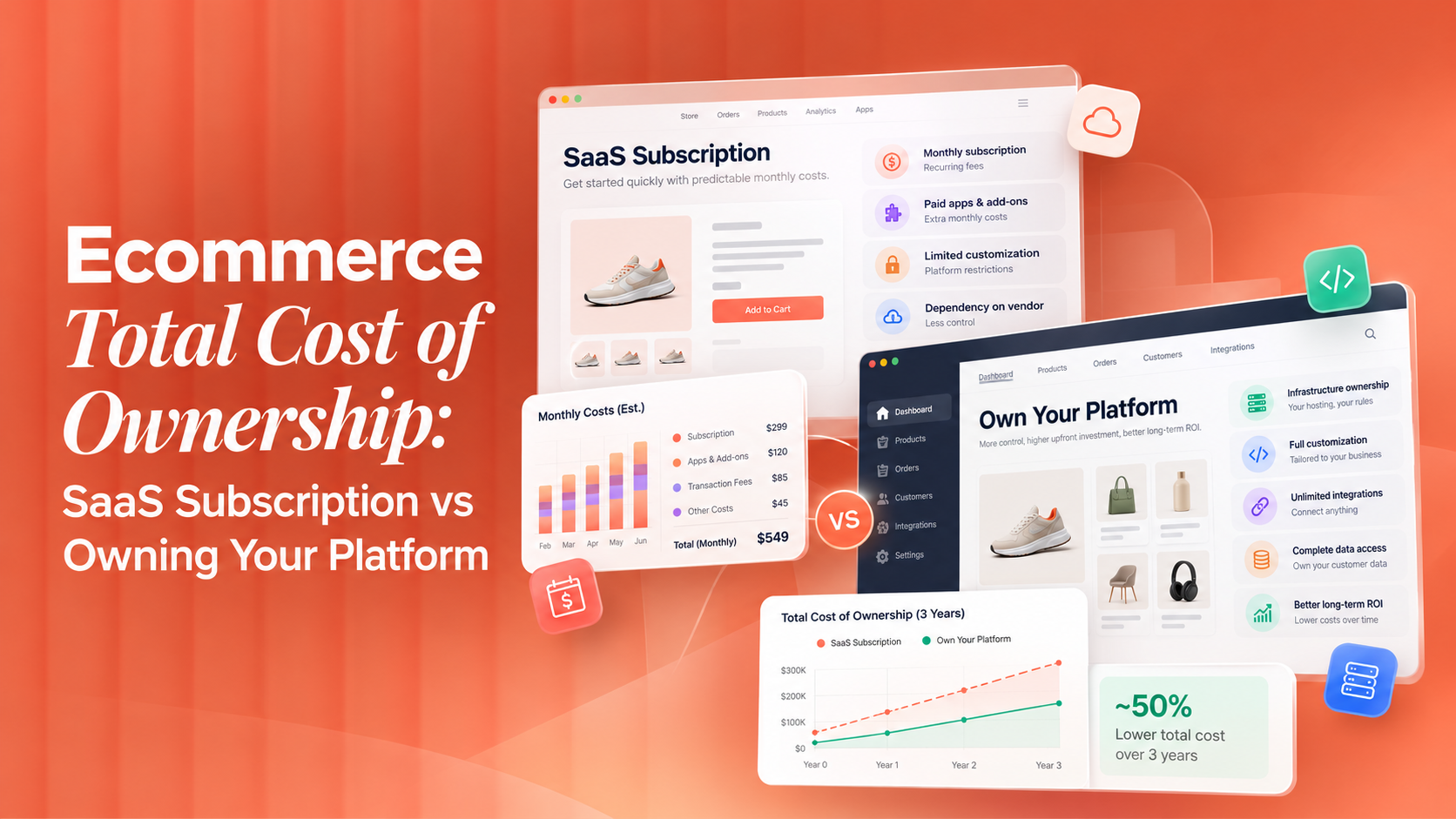
Ecommerce total cost of ownership includes more than subscription fees. Compare SaaS and custom platform costs before you choose.
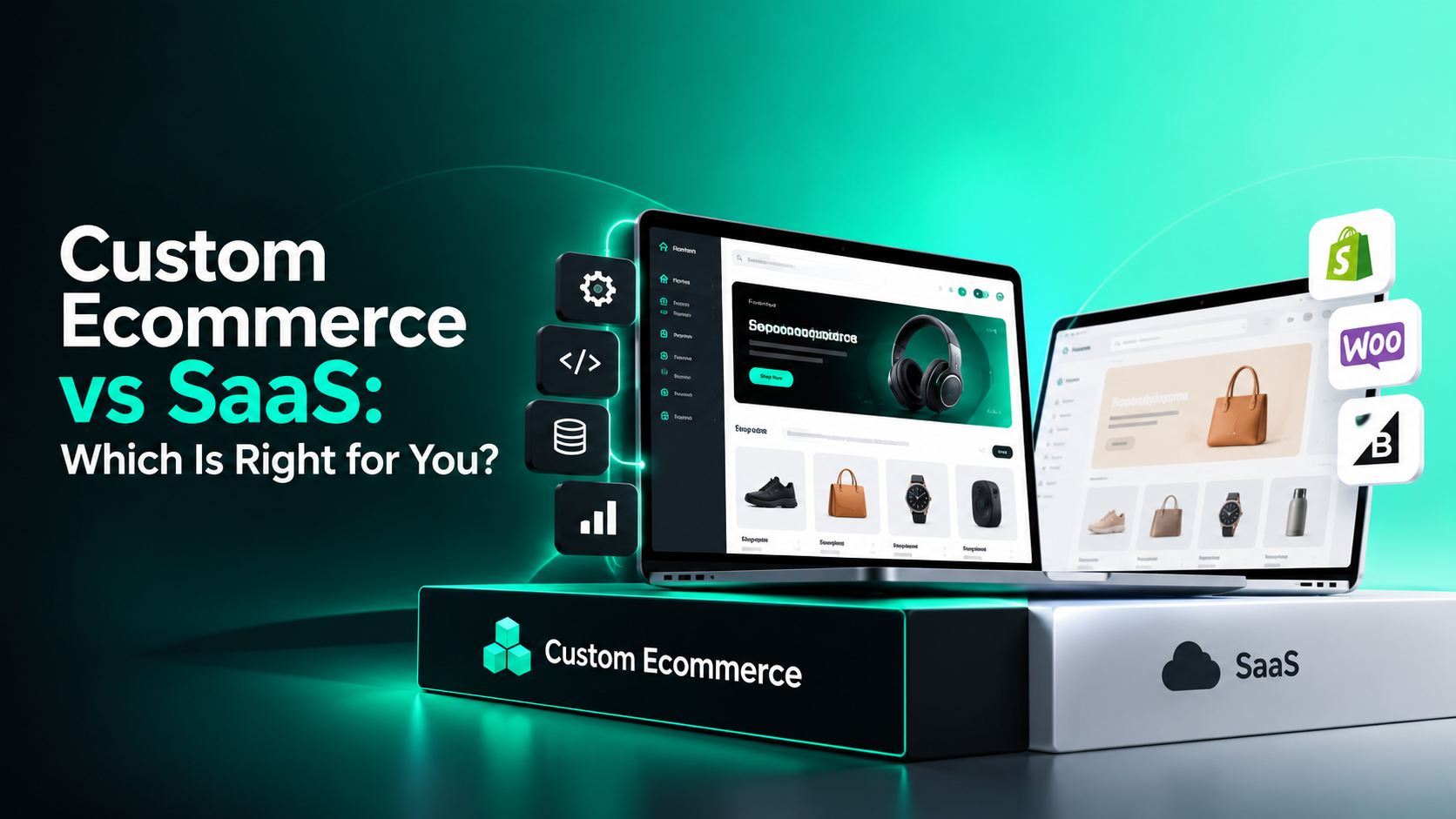
Compare custom ecommerce vs SaaS across cost, control, integrations, and growth. Choose the platform that fits your retail business.

Ebrahim KhanFounder & CEO
 We’re happy to sign an NDA upon request.