Choosing ERP is a high-stakes decision most owners make once. This 2026 framework shows how to choose ERP software for your SME without regret.
Most SME owners choose an ERP once, live with it for years, and have no easy way to undo a bad pick. That makes knowing how to choose ERP software one of the highest-leverage decisions you will make. The danger is choosing on a slick demo, a brand name, or the lowest price, then regretting it for years. This 2026 framework gives you a clear, step-by-step way to choose ERP and POS software that fits your SME, so you decide on substance, not sales pressure.
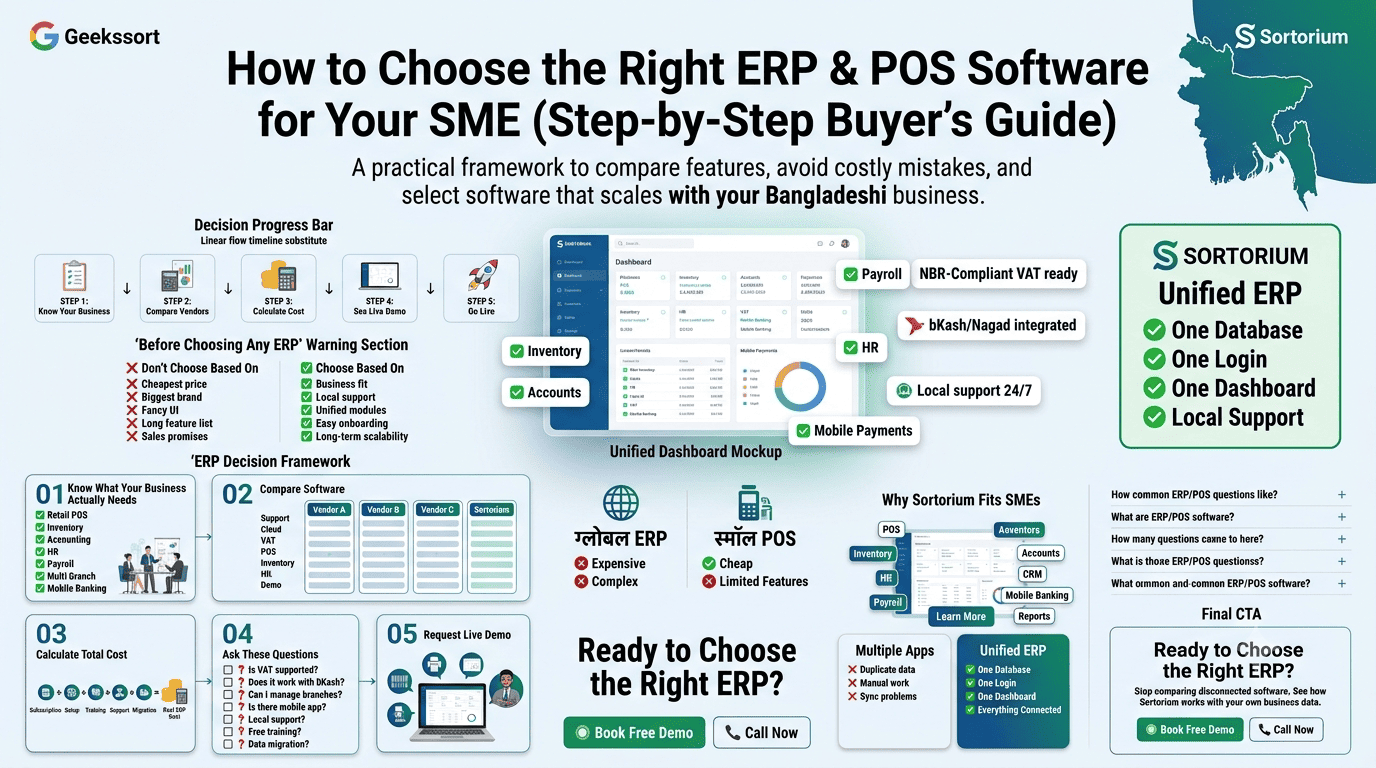
Follow the steps in order. Each one removes a common mistake and brings you closer to a confident, regret-free decision.
Step 1 in How to Choose ERP Software: Define Your Real Needs
Before looking at any product, write down what your business actually needs. List your must-haves, such as POS, inventory, VAT, mobile payments, and multi-branch, and separate them from nice-to-haves. Knowing how to choose ERP software starts here, because a clear needs list stops a flashy feature you will never use from swaying your decision.
Step 2 in How to Choose ERP Software: Match It to Your Size
An ERP built for a 500-person enterprise will drown a 10-person shop, and a basic till will not run a growing chain. Part of how to choose ERP software is honesty about your scale, now and in the next two years. Pick a platform sized for an SME that can still grow with you, not one you will outgrow or never fully use.
Step 3 in How to Choose ERP Software: Insist on Local Fit
For a Bangladeshi business, local fit is non-negotiable. The right ERP must handle NBR VAT andbKash, Nagad, and Rocket natively. Part of how to choose ERP software here is rejecting any system that treats local payments and VAT as optional add-ons.
Step 4 in How to Choose ERP Software: Compare All-In Cost
Sticker price is a trap. When learning how to choose ERP software, compare the all-in cost: subscription, onboarding, migration, training, and support over the first year. A clear breakdown of ERP cost in Bangladesh will show you why the cheapest headline is often the most expensive choice.
Step 5 in How to Choose ERP Software: Check Onboarding and Support
Ask two blunt questions: how many days until I am live, and who do I call when something breaks? How to choose ERP software well means demanding a specific onboarding timeline and confirming support is local and reachable, not a distant tier. Speed to value and responsive help matter more than a long feature list.
Step 6 in How to Choose ERP Software: Demand a Real Demo
Never buy on a generic demo. A core part of how to choose ERP software is insisting on a live demo using your own products, branches, and payment methods. If a vendor cannot show your real day on their system, that is your answer. A real demo exposes gaps a brochure hides.
Step 7 in How to Choose ERP Software: Confirm It Is Truly Unified
A POS bolted onto separate accounting is two systems pretending to be one. When deciding how to choose ERP software, confirm the platform shares a single database, so a sale updates stock and the ledger together with no double-entry. Genuine unification is the difference between a smooth system and a daily reconciliation headache.
Common Mistakes in How to Choose ERP Software
Even careful buyers slip. Avoid these when deciding how to choose ERP software.
• Choosing on a polished demo instead of your own data.
• Buying for features you will never use.
• Comparing sticker prices, not all-in cost.
• Ignoring onboarding time and local support.
• Picking a brand name over fit for your size and market.
• Skipping the check that the system is genuinely unified.
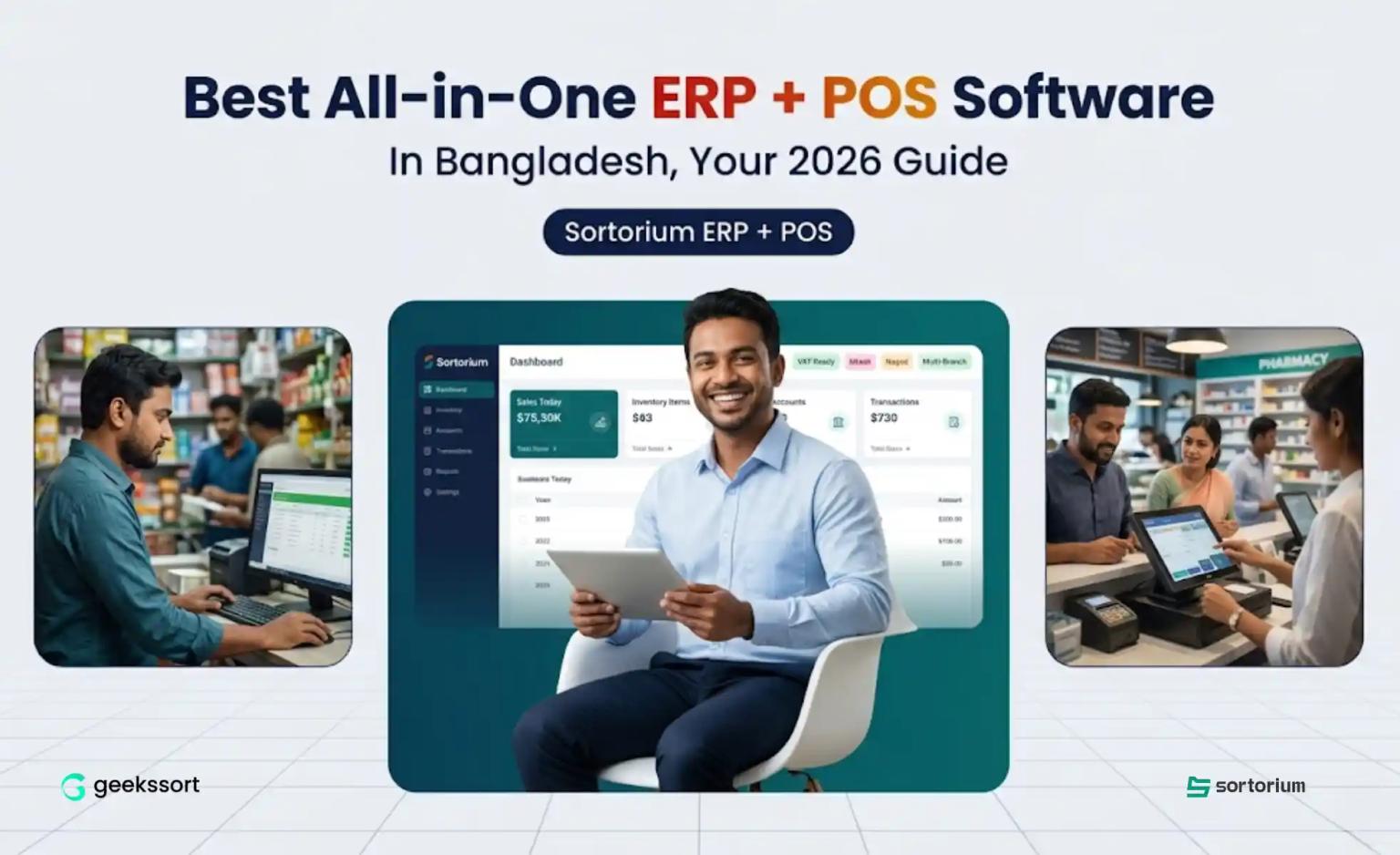
Sortorium: the all-in-one ERP and POS software in Bangladesh for SMEs.
Why Sortorium Passes the How to Choose ERP Software Test
Run Sortorium through this framework and it holds up: it is sized and priced for SMEs, built for Bangladesh with NBR VAT and bKash, Nagad, and Rocket native, all-in and predictable on cost, live in under 48 hours, supported by a local Dhaka team, demo-able with your own data, and genuinely unified on one database. That is exactly what how to choose ERP software should lead an SME toward.
How to Choose ERP Software: Frequently Asked Questions
What is the most important factor in how to choose ERP software?
Fit. The right ERP matches your size, your market, and your real needs. Everything else, including price and features, follows from choosing the right fit.
Should I choose ERP on price?
No, choose on all-in value. The cheapest sticker often hides the highest total cost. Knowing how to choose ERP software means comparing first-year all-in cost.
How important is a demo when choosing ERP?
Essential. Always demo with your own products, branches, and payments. A demo on your real data is the single best test in how to choose ERP software.
Should an SME pick enterprise ERP?
Rarely. Enterprise ERP usually overserves and overcharges an SME. Part of how to choose ERP software is matching scale to need.
How do I know if an ERP is truly unified?
Ask whether the POS and accounting share one database. If a sale does not update stock and the ledger automatically, it is not truly unified.
How long should choosing an ERP take?
A few focused weeks. Define needs, shortlist, demo with your data, compare all-in cost, and decide. Rushing or dragging both lead to regret.
The Bottom Line on How to Choose ERP Software
How to choose ERP software comes down to a disciplined framework: define real needs, match your size, insist on local fit, compare all-in cost, check onboarding and support, demand a real demo, and confirm true unification. Follow those steps and you replace sales pressure with substance. For most Bangladeshi SMEs, that framework points to a unified, locally built, SME-priced platform like Sortorium.
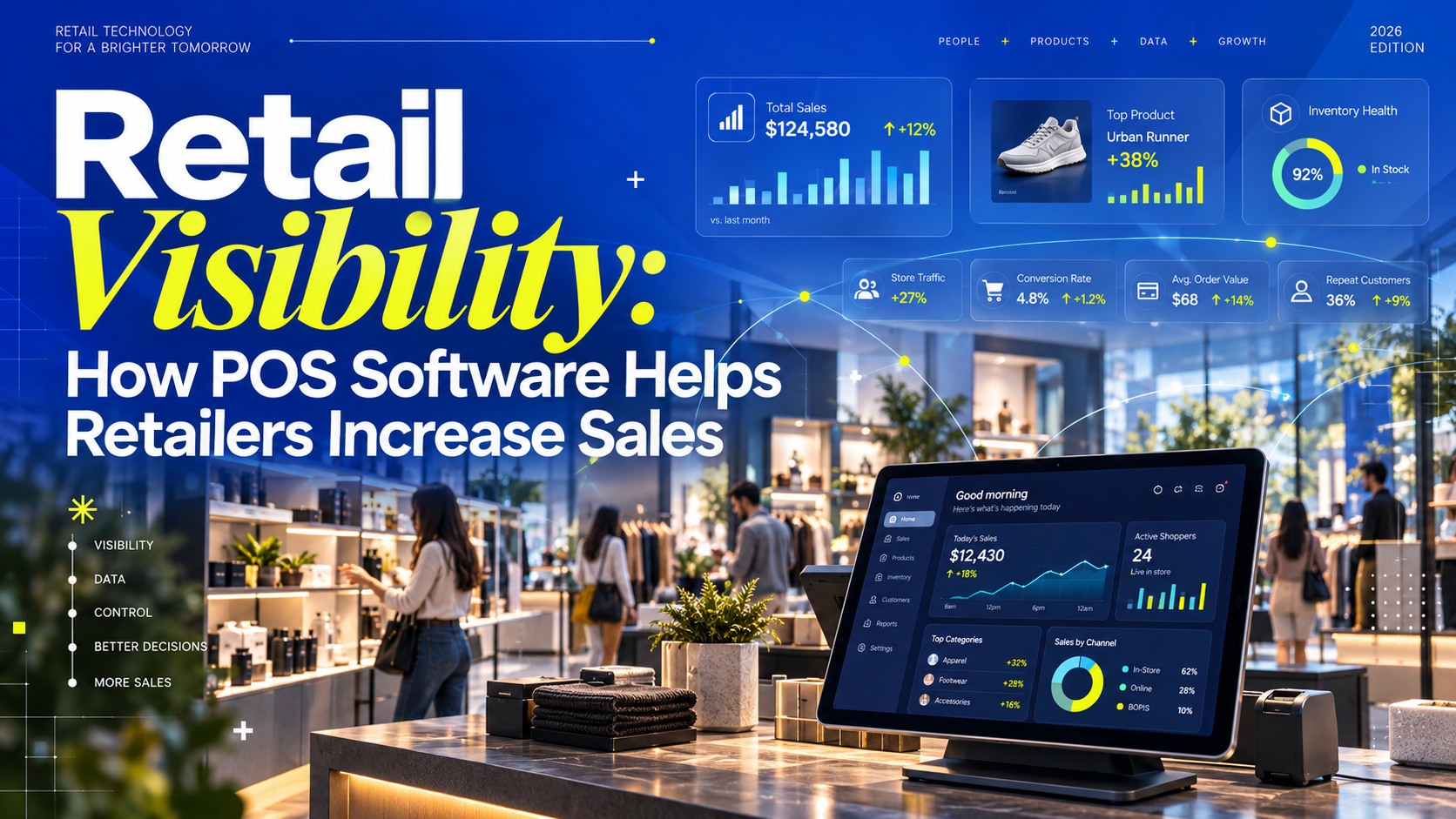
Poor retail visibility hides lost sales. Learn how a connected retail POS system brings sales, stock, customers, and branches into one view, and which daily checks turn those reports into decisions.
Learn how to build an MVP that investors will actually fund by validating key assumptions with real user data, focusing on traction instead of unnecessary features.
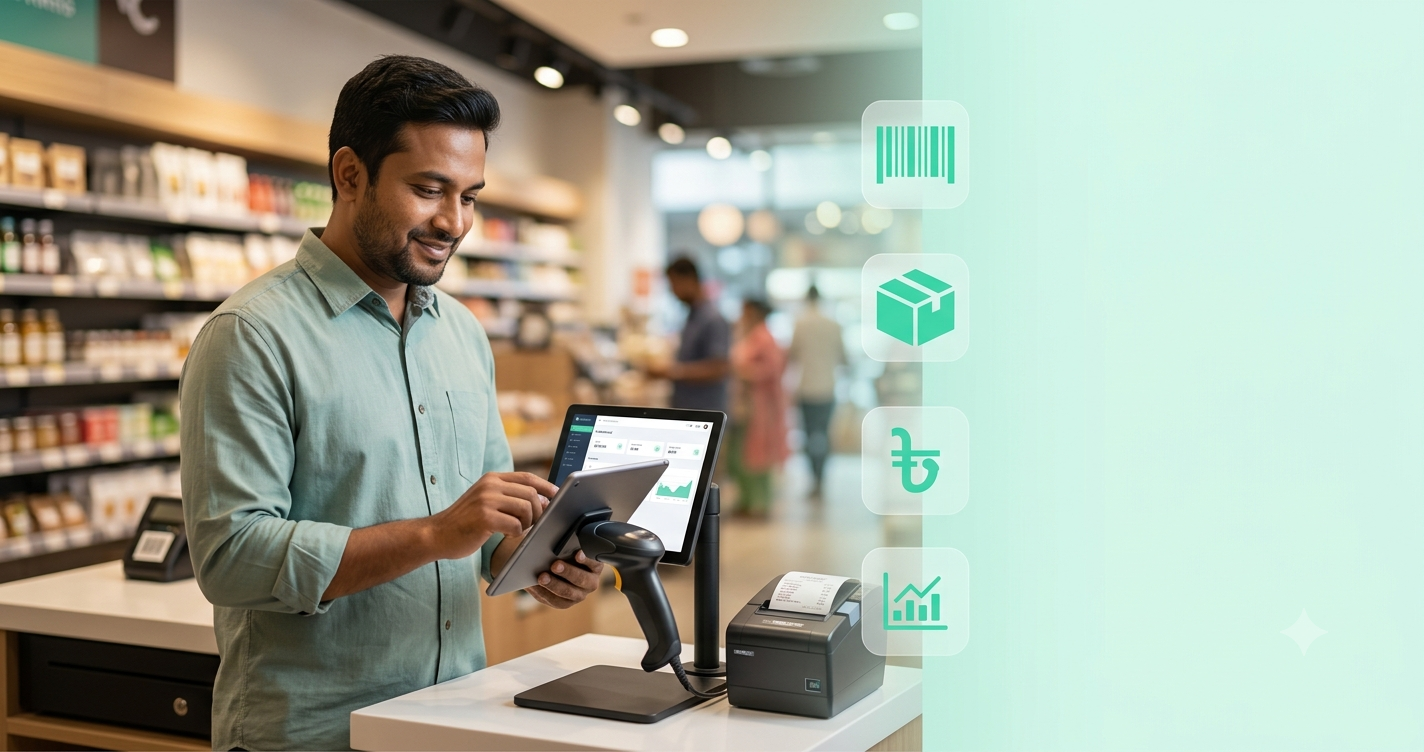
Looking for the best POS software in Bangladesh? This guide compares the top POS systems for retail stores, restaurants, pharmacies, supermarkets, wholesalers, and gyms. Explore key features, pricing, VAT/Mushak compliance, offline functionality, and industry-specific recommendations to choose the right POS solution for your business in 2026.




 We’re happy to sign an NDA upon request.